



A high pressure washer drives a pump with an electric motor or an engine and turns ordinary water into a jet that lifts dirt, grease and residue from hard surfaces. Our cart-mounted pressure washer range runs from 100 to 250 bar across electric, gasoline and diesel models. Pressure washers are chosen around the job, the power available on site and how many hours a day the machine runs, so this guide takes those three questions in order and then covers what keeps a high pressure washer working after delivery. Every figure comes from our published specifications; figures that are not on our sheets, such as noise level or fuel use per hour, are left out. For small hand-carried units used at home, see our car wash machine guide instead.
Which Jobs Need a High Pressure Washer at 200–250 bar?
Start with what the operator has to remove. Car washing and general cleaning are usually served at 100–150 bar, while paint preparation, heavy plant and yard cleaning call for a high pressure washer at 200–250 bar. Pressure removes bonded dirt and flow rinses it away, so both figures matter when you compare models.
Four of our cart-mounted models reach 200 bar or more: the 5.5 kW three-phase electric model at 200 bar, the 7.5 kW three-phase electric model at 250 bar, the 188 gasoline model at 250 bar and the 186FA diesel model at 250 bar. The 2.2, 3 and 4 kW electric models (100, 130 and 150 bar) and the 168 gasoline model (150 bar) sit in the car-washing band, with the 168 swash plate model just above it at 170 bar. A customer who says a machine is weak is asking for more pressure, and moving up the range answers that complaint.
| Model | Power source | Working pressure | Flow rate | Rated power |
|---|---|---|---|---|
| 2.2 kW single-phase | Electric, 220V | 100 bar | 11 L/min | 2.2 kW |
| 3 kW single-phase | Electric, 220V | 130 bar | 12 L/min | 3.0 kW |
| 3 kW three-phase | Electric, 380V | 130 bar | 12 L/min | 3.0 kW |
| 4 kW three-phase | Electric, 380V | 150 bar | 14 L/min | 4.0 kW |
| 5.5 kW three-phase | Electric, 380V | 200 bar | 14 L/min | 5.5 kW |
| 7.5 kW three-phase | Electric, 380V | 250 bar | 14 L/min | 7.5 kW |
| 168 gasoline | Gasoline engine | 150 bar | 15 L/min | 5 kW |
| 168 swash plate | Gasoline engine | 170 bar | 9 L/min | 4 kW |
| 188 gasoline | Gasoline engine | 250 bar | 15 L/min | 10 kW |
| 186FA diesel | Diesel engine | 250 bar | 16 L/min | 7.5 kW |
How Many Hours a Day Will the High Pressure Washer Run?
Duty hours narrow the choice faster than any pressure figure. Occasional cleaning is well served by a portable unit, while several hours a day of continuous work calls for a cart-mounted high pressure washer with a larger pump, and a diesel engine holds up better over long shifts.
For diesel, the qualifying question is hours, not pressure. A customer cleaning for an hour a day does not need a diesel high pressure washer; a contractor cleaning for six does, and will notice the difference by the end of the first week. The premium over a gasoline machine only repays itself once the machine works long shifts regularly. Below that, it is a heavier and more expensive way to do the same job.
That is why the order of questions matters: duty hours per day first, then required pressure, then flow, then transport. Buyers who start at pressure and work outward often end up with a machine that is right on paper and wrong on site. Our diesel pressure washer page sets out the jobs that justify the engine.
Should a High Pressure Washer Be Electric, Gasoline or Diesel?
The site decides. Electric models suit indoor bays and anywhere with a reliable mains supply: single-phase 220V for lighter duty and three-phase for continuous use. With no engine, an electric pressure washer starts instantly, needs no fuel handling and can be used indoors without ventilation concerns, so food premises, warehouses, building facades and machinery cleaning sit in this group. The phase is chosen by the building, not by preference; a machine specified for the wrong phase cannot be adapted on arrival.
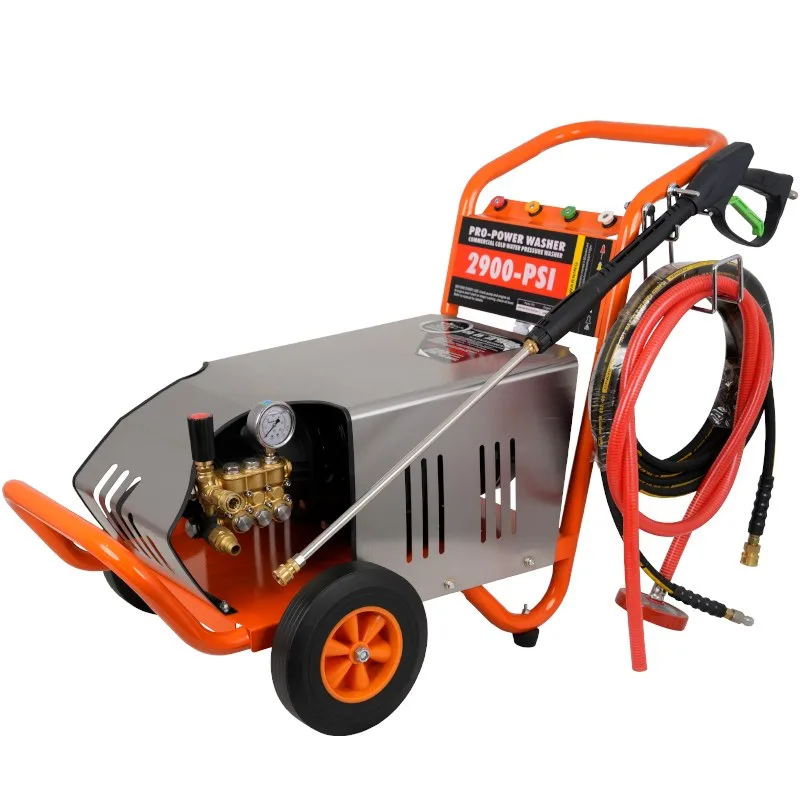
A gasoline pressure washer takes the work to farms, construction sites, mobile detailing and municipal jobs where there is no socket. The engine removes the cable and the ceiling that a domestic socket puts on available power. Bought for a fixed bay with power laid on, it is money spent on a feature nobody uses; an electric machine bought for field work sits idle waiting for a generator. Diesel covers both needs, off-grid and all day, at the cost of weight, noise and price, so it is not the machine for a detailing bay or a food premises.
Where Does a Diesel High Pressure Washer Pull Ahead?
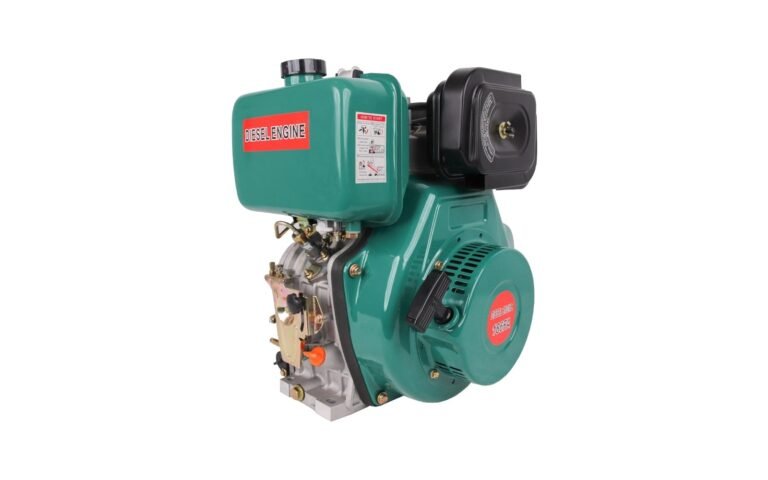
Flow is where diesel separates itself. The 186FA diesel model delivers 250 bar at 16 L/min from a 7.5 kW engine, more flow than any model in our electric line, which stops at 14 L/min, and at the highest pressure we offer. Flow decides how much surface an operator covers per hour, so pressure and flow arriving together, off-grid, for a full shift is what fleet washing and yard cleaning need. Contract cleaning, agricultural yards and industrial maintenance are typical jobs, where a gasoline unit would need refueling far more often.
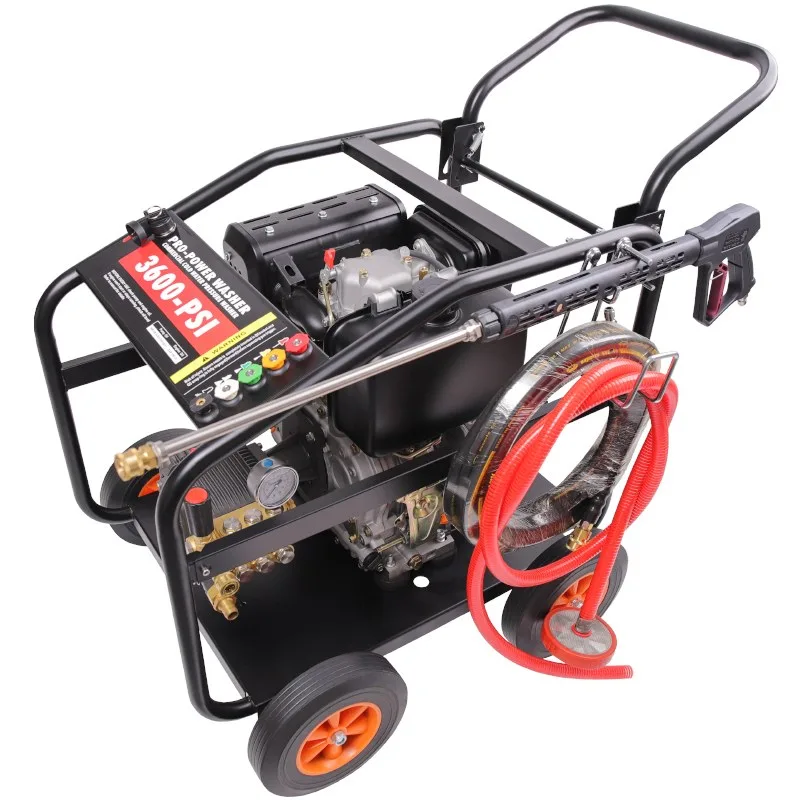
Plan for the weight as well. The 186FA ships at 82.48 kg with recoil start and 94.7 kg with electric start, in an 81×51×64 cm carton, against 67 kg for the 188 gasoline model. A diesel high pressure washer is heavier than the electric and gasoline models it sits alongside, and that affects packaging, palletizing and how many units fit a container.
What Does the Pump Change on a High Pressure Washer?
On an engine-driven high pressure washer, the pump decides more than the engine size. Our 168 gasoline model and the 168 swash plate model are built on the same 168 engine platform, yet the standard pump gives 150 bar at 15 L/min while the swash plate pump gives 170 bar at 9 L/min, trading flow for pressure. Higher flow finishes large surfaces faster; higher pressure releases coatings and baked-on residue that flow alone will not shift.
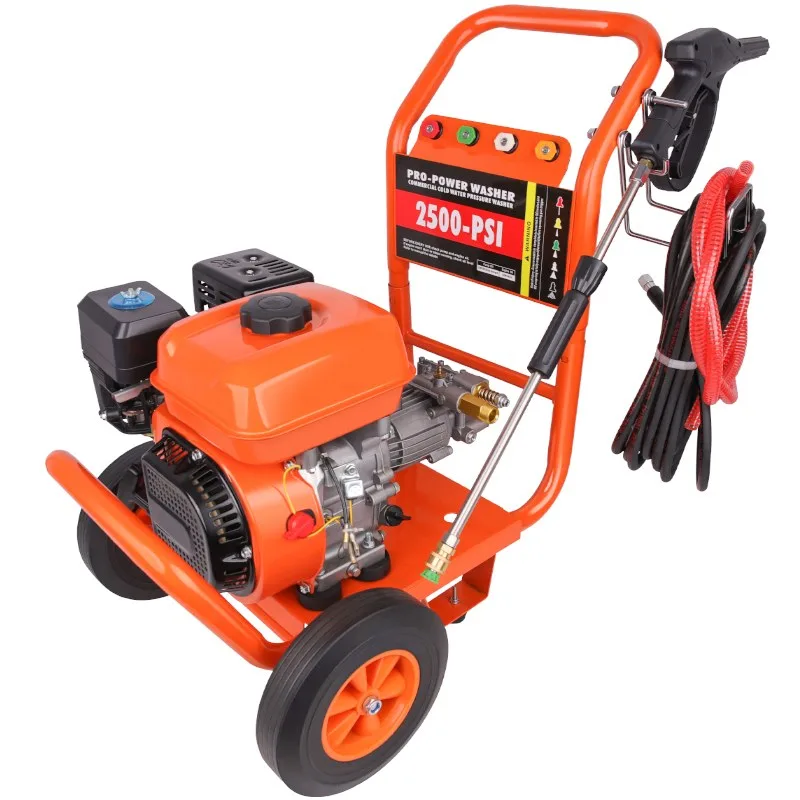
Moving up the engine range raises pressure while flow stays broadly level: the 188 gives 250 bar at 15 L/min. The electric line shows the same pattern, with the 4, 5.5 and 7.5 kW models all at 14 L/min. A bigger motor or engine on a high pressure washer buys cleaning power, not cleaning speed. Our PSI vs GPM guide explains that trade in more detail.
What Keeps a High Pressure Washer Working After Delivery?
Ask about the water supply before quoting. A high pressure washer starved of inlet water will cavitate and damage its own pump, which causes more warranty claims than any manufacturing fault; high-flow machines need an inlet that keeps up. Stock consumables: pump seals, nozzles, hoses and lances on every machine, filters and spark plugs on gasoline units, and fuel-system parts on diesel. Hard-working machines need service sooner than customers expect, diesel fuel quality matters more in hot or dusty markets, and water left in a pump through a freeze will crack it.
Settle the specification before production: voltage, frequency and phase for electric models, recoil or electric start for engine models, then hose length: 9 m standard, 15 m or 20 m optional, with or without a reel. CE certification can be supported, varying by model and destination market, and WENXIN supports OEM and ODM orders with custom logo, color, labeling and carton design. Tell us what you are cleaning, the power on site and your order volume, and we will recommend a high pressure washer with full specifications.
Sourcing sprayers, generators or water pumps?
Talk to the WENXIN factory team about specifications, customization and OEM orders.