



A customer asks for “the strongest one you have,” and the quotation comes back with two numbers. One is pressure. One is flow. The whole PSI vs GPM argument comes down to which of those two actually decides whether the machine finishes the job — and that answer changes depending on what is being cleaned.
It is worth settling the PSI vs GPM question before you order a container. Picking on the wrong number is how a distributor ends up with a shelf of machines that impress in a demo and disappoint on a real work site.
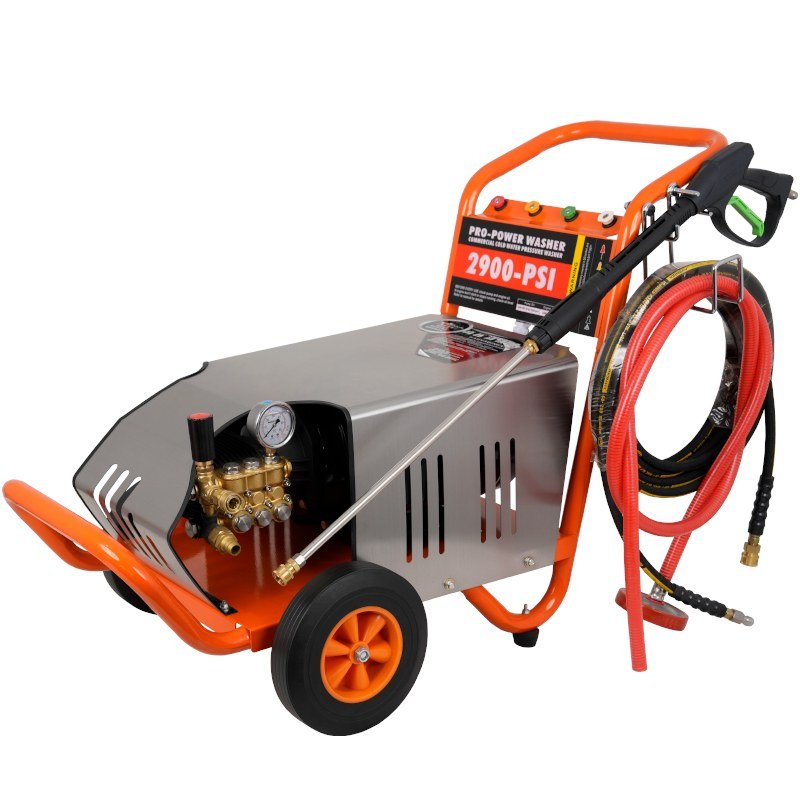
What Do PSI and GPM Actually Measure?
PSI (pounds per square inch) measures pressure — how hard the water hits the surface. GPM (gallons per minute) measures flow — how much water arrives at that surface every minute.
The practical way to think about it: pressure breaks the bond between the dirt and the surface, and flow carries the loosened dirt away and covers ground. You need both. A machine with pressure and no flow strips a small patch beautifully and takes all afternoon to finish a truck. A machine with flow and no pressure rinses a lot of area without shifting anything that is actually stuck on.
PSI vs GPM: Which One Decides Cleaning Speed?
Once there is enough pressure to release the dirt, extra pressure stops buying you time. Flow does. This is why operators cleaning large areas — vehicle fleets, floors, farm equipment — tend to care about flow, while operators removing coatings, scale or baked-on grease care about pressure.
So the honest answer to PSI vs GPM is that pressure decides whether you can clean something, and flow decides how fast. If a customer complains that a machine is slow rather than weak, more pressure is usually not the fix.
What Our Spec Sheets Show About PSI vs GPM
This is easier to see in real figures than in theory. Here is our single- and three-phase electric pressure washer range, straight from the published specifications:
| Rated power | Working pressure | Flow rate |
|---|---|---|
| 2.2 kW | 100 bar | 11 L/min |
| 3.0 kW | 130 bar | 12 L/min |
| 4.0 kW | 150 bar | 14 L/min |
| 5.5 kW | 200 bar | 14 L/min |
| 7.5 kW | 250 bar | 14 L/min |
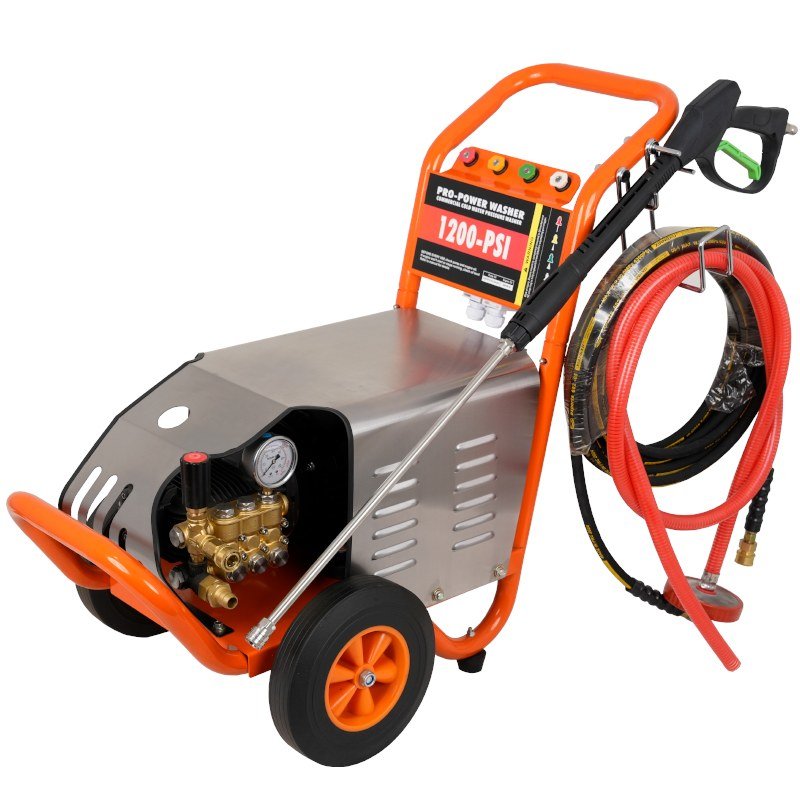
Look at what moves. Across that range the pressure goes up two and a half times. The flow goes up by about a quarter — and then stops entirely: 4.0 kW, 5.5 kW and 7.5 kW all sit at 14 L/min.
That single detail answers a lot of PSI vs GPM questions on its own. Moving a customer up this range buys them cleaning power, not cleaning throughput. If the complaint is “it takes too long,” a bigger motor in the same family is not going to fix it.
Why Two Machines With the Same Power Give Different Answers
Power rating alone does not tell you where a machine sits on the PSI vs GPM balance. The pump does. Compare two 4 kW machines from our own catalogue:
- 4.0 kW electric — 150 bar, 14 L/min
- 4 kW gasoline pressure washer with a swash plate pump — 170 bar, 9 L/min
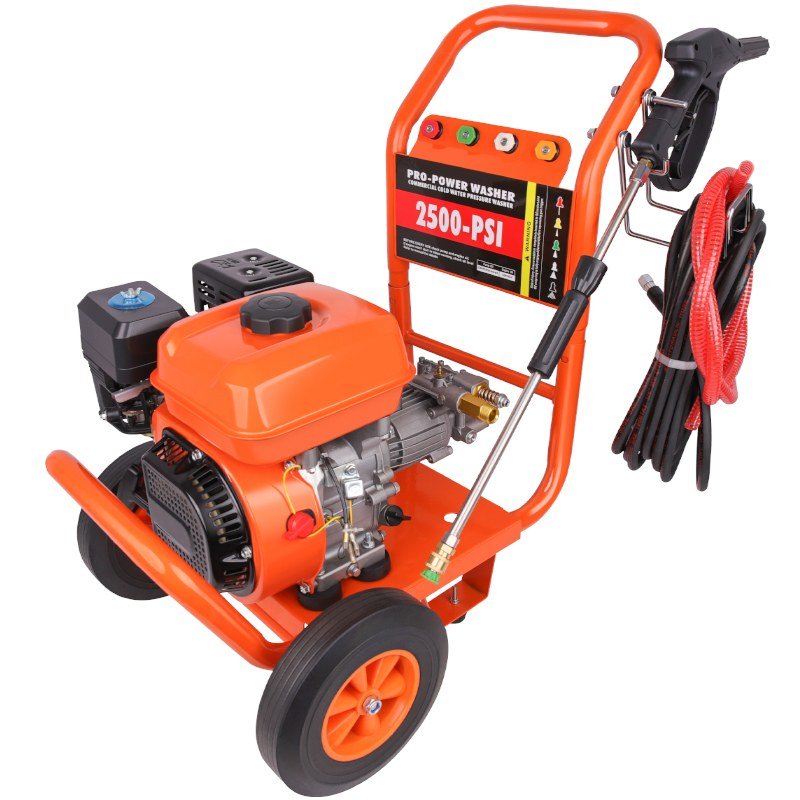
Same nominal power, opposite bias. The swash plate unit trades away a third of the flow to gain pressure. Neither is better in the abstract; they are built for different complaints.
Engine-driven units also change the ceiling. Our diesel pressure washer models reach 16 L/min at 200 and 250 bar — more flow than any electric model in the range, which matters when the work is continuous and off-grid.
Reading PSI vs GPM When the Datasheet Says Bar and L/min
Here is the part that trips buyers up. PSI and GPM are North American units. Most catalogues elsewhere — including ours — publish pressure in bar or MPa and flow in litres per minute. The specification is the same; the labelling is not.
The conversions are fixed: 1 bar is about 14.5 psi, 1 MPa equals 10 bar, and 1 litre per minute is about 0.26 gallons per minute. The mistake to avoid is comparing two quotations without checking which unit each one used. A number that looks ten times larger is sometimes just MPa written as bar.
If you are shortlisting suppliers, ask for pressure and flow in the same units before you compare anything else. It takes one message and saves an argument later.
Matching PSI vs GPM to the Job
Rather than chasing a headline number, work the PSI vs GPM question backwards from what the machine has to do every day:
- Vehicle and fleet washing — large surfaces, light to moderate soiling. Flow does most of the work here.
- Workshops and equipment cleaning — grease and stuck-on residue. Pressure earns its place.
- Farm and municipal work — mixed conditions, long shifts, often no mains supply. Engine-driven units, and flow at the top of the range.
Then check the balance of the specific model rather than assuming the power rating implies it. You can see the full range on our pressure washer page.
Frequently Asked Questions
Is higher PSI always better?
No. Beyond the pressure needed to release the dirt, more pressure adds cost and, on delicate surfaces, risk. It does not make the job faster.
In PSI vs GPM, which should I prioritise for a car wash?
Flow, in most cases. Car wash work is large-area, repetitive and time-sensitive, and throughput follows flow once pressure is adequate.
Does a higher kW rating mean higher flow?
Not necessarily. In our electric range flow is flat at 14 L/min from 4.0 kW upward while pressure keeps climbing. Always read the flow figure rather than inferring it from power.
Can I get both high pressure and high flow?
Up to a point, and it usually means moving to an engine-driven machine or a different pump class rather than a bigger motor in the same family. Tell us the application and we will point at the models that fit it.
Sourcing sprayers, generators or water pumps?
Talk to the WENXIN factory team about specifications, customization and OEM orders.