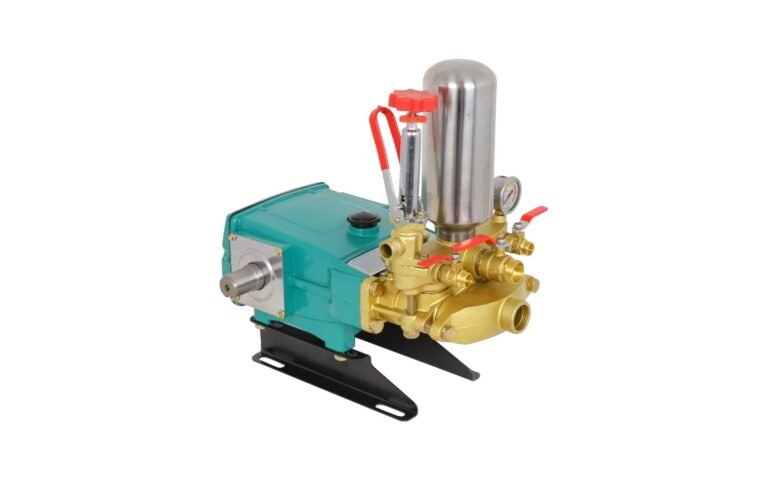




A single-cylinder 4 stroke diesel engine in this class is a power unit rather than a finished machine. It drives diesel water pumps, generators, pressure washers, tillers, threshers and small marine and industrial equipment anywhere a job demands sustained torque and long running hours away from a mains connection. On our engine and diesel engine pages, our published range covers three platforms and seven configurations from 211 to 531 cc (2.5 to 8.5 kW rated at 3600 r/min). Every figure below comes from our specification sheets; figures not on our sheets, such as hourly fuel consumption, compression ratio or noise level, are left out. For how two-stroke and four-stroke designs split across smaller tools, see our two-stroke vs four-stroke guide.
How Does a 4 Stroke Diesel Engine Complete Its Four-Stroke Cycle?
As a general principle of engine design, a 4 stroke diesel engine completes one power cycle across four piston strokes — intake, compression, power and exhaust — over two revolutions of the crankshaft. Unlike a two-stroke unit that mixes lubricating oil into the fuel, a four-stroke engine carries its oil separately in a crankcase sump. And unlike a spark-ignition gasoline engine, only air is drawn into the cylinder and compressed on the upward stroke before diesel fuel is delivered through an injector.
Those mechanical basics map directly to the columns on a specification sheet. On a 4 stroke diesel engine, the cylinder bore and piston stroke set the swept displacement, running from 70×55 mm (211 cc) on our 170 model up to 95×75 mm (531 cc) on our 195 configuration. The separate sump is sized by the oil capacity column (0.75 L on the 170, 1.1 L on the 178, and 1.65 L across the 186 series), while all seven configurations deliver their rated output at 3600 r/min.
How Are Our 4 Stroke Diesel Engine Models Structured From 211 to 531 cc?
Our 4 stroke diesel engine range is built around three single-cylinder platforms rather than seven unrelated engines, and understanding that layout makes specifying much simpler. At the compact end sit the 170 diesel engine at 211 cc (2.5 kW rated, 2.8 kW max, 3.8 HP) and the 178 diesel engine at 296 cc (3.7 kW rated, 4.0 kW max, 5.4 HP). Above them, the 186 diesel engine page covers five displacements on a single platform: 186FA (418 cc, 5.7 kW), 188 (456 cc, 7.0 kW), 190 (477 cc, 7.5 kW), 192 (498 cc, 8.0 kW) and 195 (531 cc, 8.5 kW).
Inside that upper platform, the 186FA uses an 86×72 mm bore and stroke, while across the 188, 190, 192 and 195 configurations the stroke stays fixed at 75 mm as the bore steps from 88 mm to 95 mm. All five share the same engine block, mounting pattern, 5.5 L fuel tank, 1.65 L oil capacity and 510×470×550 mm carton.
| Model | Bore × stroke | Displacement | Rated / max power | Horsepower | Fuel / oil capacity | Carton size |
|---|---|---|---|---|---|---|
| 170 | 70×55 mm | 211 cc | 2.5 / 2.8 kW | 3.8 HP | 2.5 L / 0.75 L | 420×380×470 mm |
| 178 | 78×62 mm | 296 cc | 3.7 / 4.0 kW | 5.4 HP | 3.5 L / 1.1 L | 475×470×510 mm |
| 186FA | 86×72 mm | 418 cc | 5.7 / 6.3 kW | 8.6 HP | 5.5 L / 1.65 L | 510×470×550 mm |
| 188 | 88×75 mm | 456 cc | 7.0 / 7.5 kW | 10.2 HP | 5.5 L / 1.65 L | 510×470×550 mm |
| 190 | 90×75 mm | 477 cc | 7.5 / 8.0 kW | 10.9 HP | 5.5 L / 1.65 L | 510×470×550 mm |
| 192 | 92×75 mm | 498 cc | 8.0 / 8.5 kW | 11.5 HP | 5.5 L / 1.65 L | 510×470×550 mm |
| 195 | 95×75 mm | 531 cc | 8.5 / 9.0 kW | 12.2 HP | 5.5 L / 1.65 L | 510×470×550 mm |
Which Equipment Matches Each 4 Stroke Diesel Engine Platform?
Always start from the driven equipment rather than from the engine list. The water pump, generator head or implement defines the required power and operating speed, and the 4 stroke diesel engine is chosen to meet that load with a sensible margin rather than simply picking the largest displacement available. Buyers in this category are usually equipment assemblers building around a proven power unit or distributors supplying replacement engines into an installed field base.
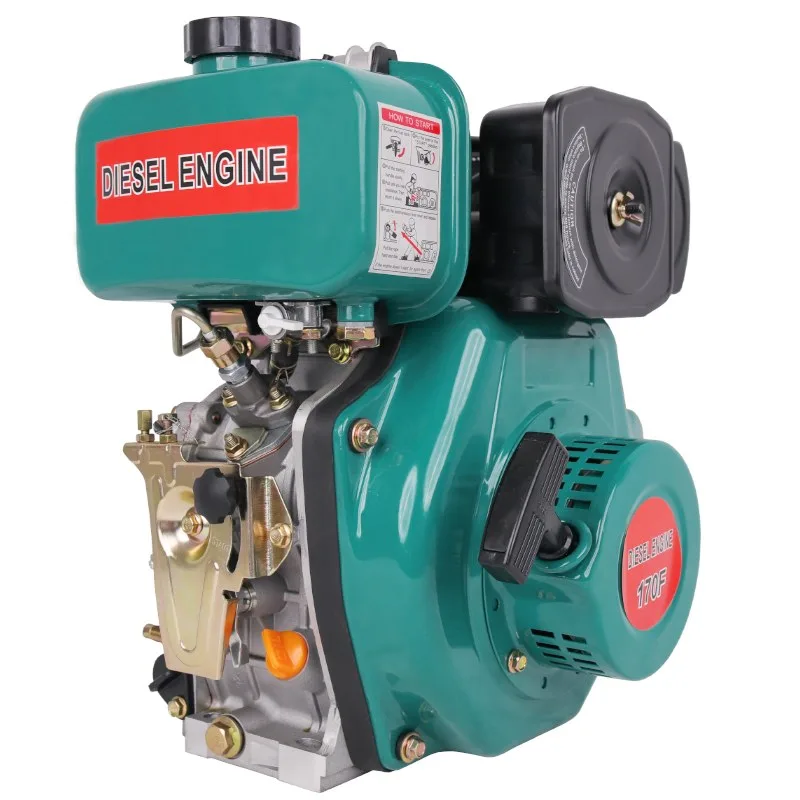
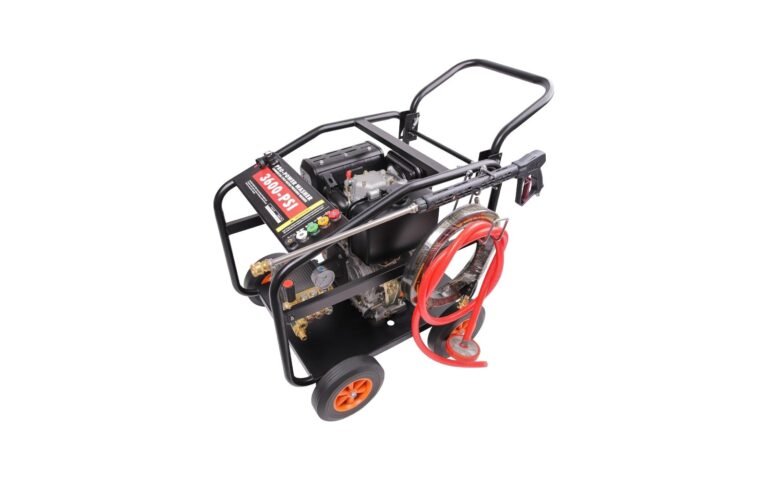
Our own finished equipment pages show how each platform pairs up in practice. The 211 cc 170 model (2.5 kW rated, 3.8 HP) powers our two-inch diesel water pump. Stepping up to the 296 cc 178 model (3.7 kW rated, 5.4 HP) powers our three-inch diesel water pump and our open-frame diesel generator. At the top end, the 418 cc 186FA (5.7 kW rated, 8.6 HP) and the 456 to 531 cc configurations drive our four-inch diesel water pump, our 186FA diesel pressure washer and our multi-kilowatt diesel generators.
When Should You Choose a 4 Stroke Diesel Engine Over Gasoline?
Because our general-purpose four-stroke gasoline engine family covers a similar power band, headline output alone does not separate the two fuels — daily running hours do. Compared with a gasoline unit, a 4 stroke diesel engine is heavier and costs more up front, and it earns that premium back only where the working hours are high enough to repay it. Where a machine is carried frequently or runs for short, occasional jobs, gasoline remains the lighter and simpler choice.
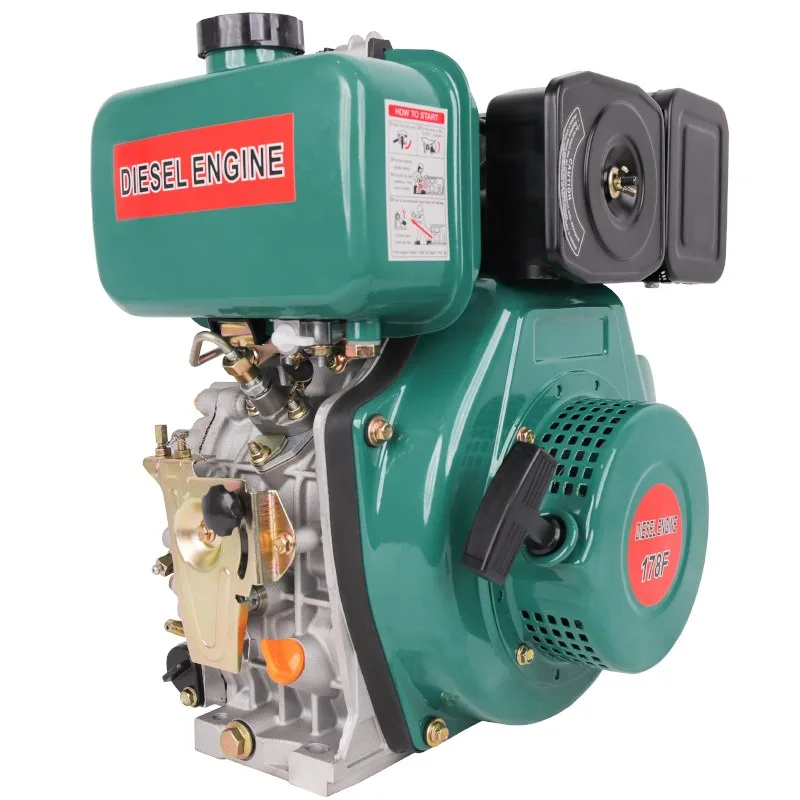
Duty cycle also guides selection inside the 186 diesel platform itself. Because all five steps from 186FA (418 cc, 5.7 kW) through 195 (531 cc, 8.5 kW) share one exterior envelope, the choice between them comes down to how hard and how long the driven machine works. Smaller displacements in the series suit intermittent standby duty, while the 190 (477 cc, 7.5 kW), 192 (498 cc, 8.0 kW) and 195 (531 cc, 8.5 kW) configurations hold rated output through long continuous runs on a single tank.
How Do You Specify Starting Method and Mounting on a 4 Stroke Diesel Engine?
Once the displacement platform is settled, confirm the starting method. Every model in our 4 stroke diesel engine range is offered with recoil start and electric start, and the choice is dictated by where the machine sits and who operates it. Confirm starting method, cooling and shaft configuration for the destination market before production, since these interfaces are hard to alter once equipment is built.
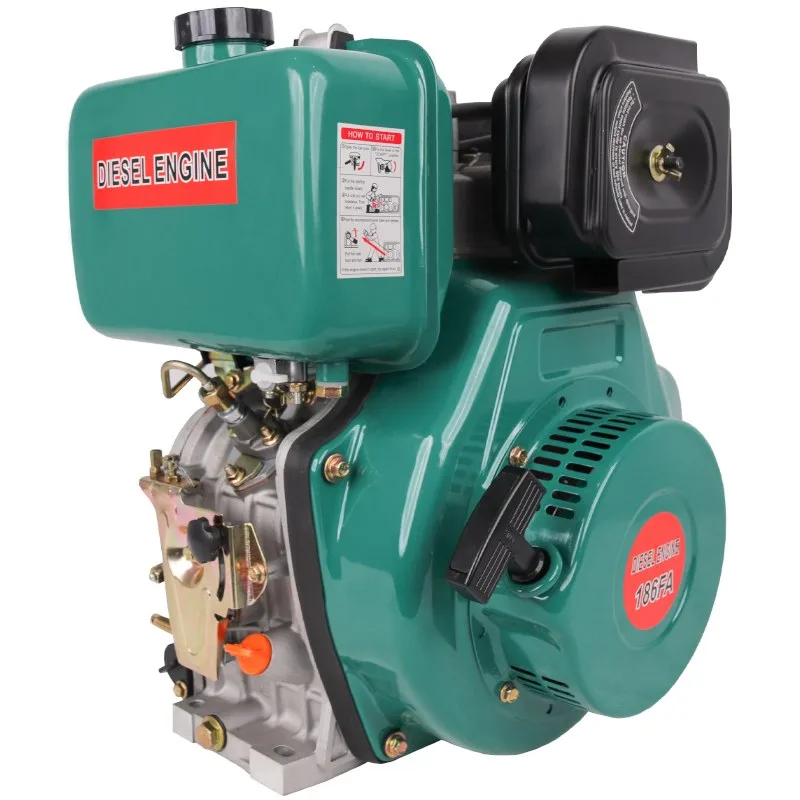
Check the physical envelope at the same time. Bore and stroke figures tell you about swept volume, but mounting dimensions, shaft configuration and tank position (2.5 L on the 170, 3.5 L on the 178, and 5.5 L on the 186 series) decide whether a 4 stroke diesel engine bolts into the machine — verify them on the drawing rather than from a catalog line. Because the 186FA through 195 share one block and mounting face in a 510×470×550 mm carton (against 420×380×470 mm on the 170 and 475×470×510 mm on the 178), an assembler can move between 5.7 and 8.5 kW without redesigning the frame.
What Keeps a 4 Stroke Diesel Engine Running After Delivery?
Plan for routine consumables alongside the engine order: filters, injectors, gaskets and starting components. A 4 stroke diesel engine sold into equipment that runs every day reaches its service points quickly, and local availability of routine parts is what determines whether a buyer returns. That is where platform sharing pays off commercially: a distributor stocking the 186 series covers 5.7 to 8.5 kW (8.6 to 12.2 HP) across five displacements without carrying five separate parts inventories.
Fuel quality is the other recurring field issue. In markets where fuel storage conditions are poor, giving filtration guidance at the point of sale prevents most of the faults that would otherwise come back as warranty claims. CE certification can be supported for diesel engines, varying by model and destination market, and WENXIN supports OEM and ODM orders including custom logo, color, labeling, carton packaging, starting method and shaft configuration. Contact our team with the driven equipment, duty cycle and order volume, and we will recommend a 4 stroke diesel engine with full specifications.
Sourcing sprayers, generators or water pumps?
Talk to the WENXIN factory team about specifications, customization and OEM orders.