



A diesel generator for home backup is what households and small premises buy when power cuts last hours rather than minutes. Buyers in India search for the machine in exactly those words; in our catalogue it sits under diesel generator, in open frame and silent cabinet builds from 2.8 kW to 13.5 kW. This guide explains how to choose a diesel generator for home use by output, run time, housing and electrical build. Every figure comes from the published specifications of our own range, and we do not convert kilowatts into kVA or list appliance wattages: those depend on the actual load, so quote from the number on the specification sheet.
What Is a Diesel Generator for Home Used For?
It keeps a house or small premises running through long outages where mains power is unreliable. A diesel generator is chosen when the machine has to run for hours rather than minutes: gasoline suits occasional and portable duty, diesel suits sustained duty. Our gasoline vs diesel generator guide covers that choice in detail.
The economics follow from it. A diesel generator for home only makes sense once the running hours are high enough to matter, so the first question for any customer is how many hours per week the machine will actually run. Below that threshold a diesel unit is an expensive way to buy a feature nobody uses. Above it, nothing else will do the job.
How Much Output Does a Diesel Generator for Home Need?
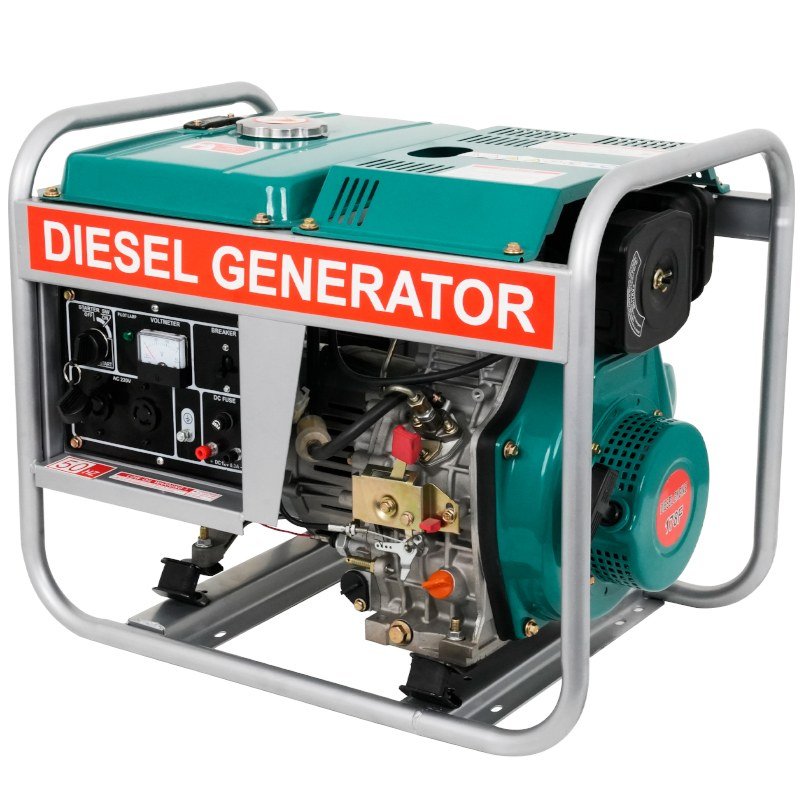
Enough for the running load, plus anything that draws extra current at start-up. Every configuration in our range is published with two figures, a rated output and a slightly higher maximum: 2.8 kW rated and 3.0 kW maximum on the smallest set, for example. Quote from the rated figure for the load that runs continuously, and treat the maximum as headroom rather than a target. Our diesel generator for home range covers these outputs:
| Configuration | Rated output | Maximum | Voltage | Fuel tank | Run time per fill |
|---|---|---|---|---|---|
| Manual open frame 2.8 kW | 2.8 kW | 3.0 kW | 220V | 12.5 L | 10 h |
| Manual open frame 4.6–6.5 kW | 4.6–6.5 kW | 5.0–7.0 kW | 220V/380V | 12.5 L | 5.6–7.7 h |
| Silent cabinet 4.2–6.0 kW | 4.2–6.0 kW | 4.5–6.5 kW | 220V/380V | 16 L | 6–8.5 h |
| Freezer cabinet, 8.0 kW step | 8.0 kW | 8.5 kW | 220V/380V | 25 L | 8.6 h |
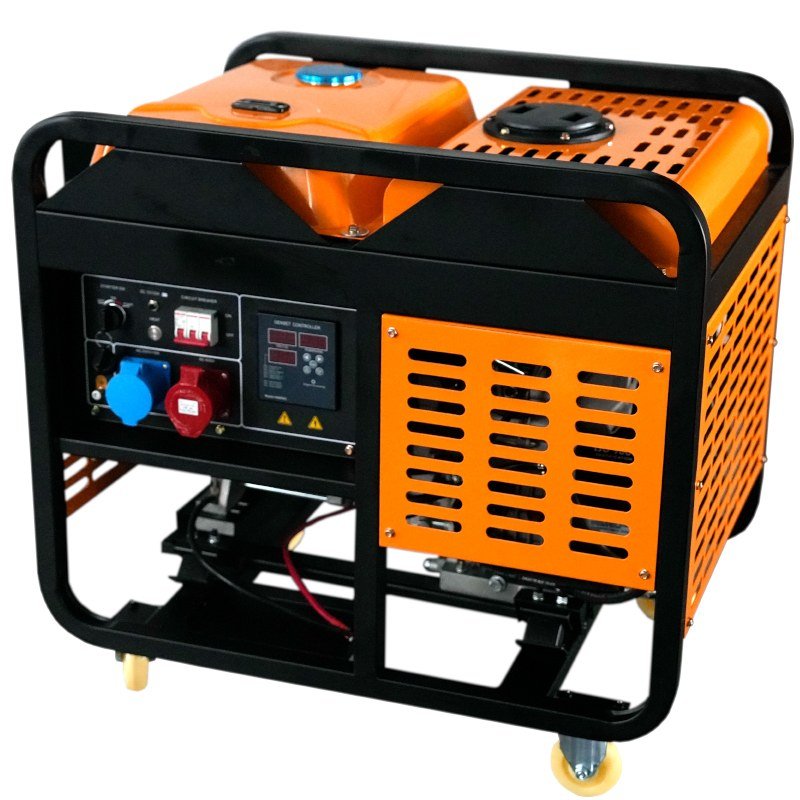
| Electric start open frame 11.5–13.5 kW | 11.5–13.5 kW | 12.5–14.5 kW | 220V/380V | 27 L | 6–7 h |
| Double door cabinet 11–13 kW | 11–13 kW | 12–14 kW | 220V/380V | 25 L | 5.5–6.5 h |
The 4.2–6.0 kW band is the busiest part of the range: the same four steps are built in four cabinet styles, and the freezer cabinet stretches the band to 8.0 kW. Above that, the 11–13.5 kW sets run V-twin diesels for buyers who need double-digit kilowatts.
Why Does Run Time Matter for a Diesel Generator for Home?
Because a home backup set has to cover the whole outage, and the tank decides how often someone has to refuel it. Size and run time get treated as separate questions, and they are not: within our range, run time falls as rated power rises from the same tank, so the larger unit needs refuelling sooner under load.
The manual open frame family shows it clearly. On the same 12.5 L tank, the 4.6 kW step runs for 7.7 hours and the 6.5 kW step for 5.6 hours, while the 2.8 kW set runs for up to 10 hours, the longest single-fill figure in our diesel line. The silent cabinets repeat the pattern on 16 L: 8.5 hours at 4.2 kW and 6 hours at 6.0 kW. Buyers who size only for peak load are often surprised by this on the first night.
Where a larger diesel generator for home is needed, the tank grows with it: 25 L on the 8.0 kW freezer cabinet step, which lists 8.6 hours, and 27 L on the 11.5–13.5 kW open frame sets.
Should a Diesel Generator for Home Be Open Frame or Silent?
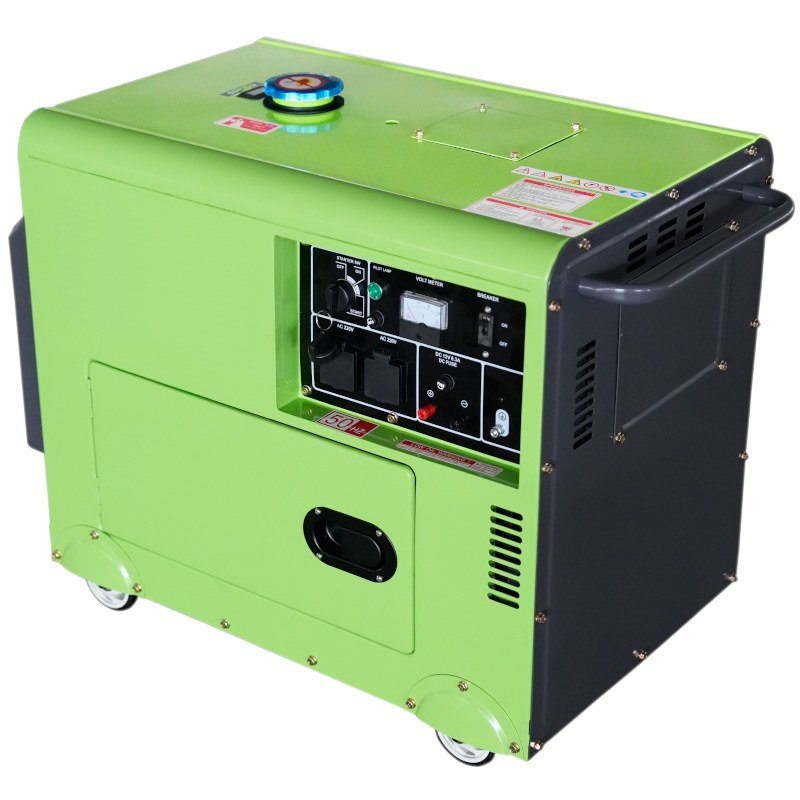
Where the machine will physically stand decides the answer more reliably than any preference. Silent units are enclosed and intended for places where the machine sits near people, including premises with neighbours and residential backup. Open frame units are simpler, easier to service and lighter to move, which suits farms, sites and workshops where noise is not the deciding factor and access for maintenance is.
The enclosure that reduces noise also affects cooling and access, which is why our silent range carries a larger fuel tank than the equivalent open frame configuration: on the same 418–531 cc engines, the silent cabinets carry 16 L against 12.5 L on the open frame. Within the silent range, the compact silent cabinet, the old square cabinet, the loaf cabinet and the freezer cabinet share the same 4.2, 4.5, 5.5 and 6.0 kW steps and the same 16 L tank, so switching styles never changes the service parts. Customers who ask for a silent diesel generator for home are usually asking where it will stand, which is the right question.
Which Voltage and Starting Method Should a Diesel Generator for Home Have?
The ones the destination market uses, confirmed at quotation stage, because voltage, frequency and starting method cannot be adjusted after shipping. In our range, the 2.8 kW open frame set is built for 220V and every other configuration is listed at 220V/380V. All of them are listed at 50 Hz.
Starting differs by family. The 2.8 kW and 4.6–6.5 kW open frame sets are manual start, which keeps the electrical system minimal and the family uniform for parts and training. The 11.5–13.5 kW open frame sets are started electrically as standard. Check all three points against the market before the order is placed, not at the port. For a distributor serving several markets, that means confirming them order by order.
What Should Distributors Confirm Before Ordering a Diesel Generator for Home?
Two answers decide the configuration: how many hours the machine runs and where it will stand. Then plan for the two things diesel generator buyers complain about most, fuel quality and service intervals. Diesel is less forgiving of poor storage than gasoline, and a machine that runs long hours reaches its service points faster than customers expect.
Both are avoidable with clear guidance at the point of sale. Supply filters and common wear parts alongside the machine, and be explicit about the maintenance schedule rather than leaving it in the manual. A diesel generator for home that is easy to service locally stays in use. We supply diesel generators in open frame and silent configurations from 2.8 kW to 13.5 kW, with OEM and ODM support for brand, colour, packaging and specification. Tell us the run hours and where the machine will stand, and we will point you to the configurations that suit it.
Sourcing sprayers, generators or water pumps?
Talk to the WENXIN factory team about specifications, customization and OEM orders.