



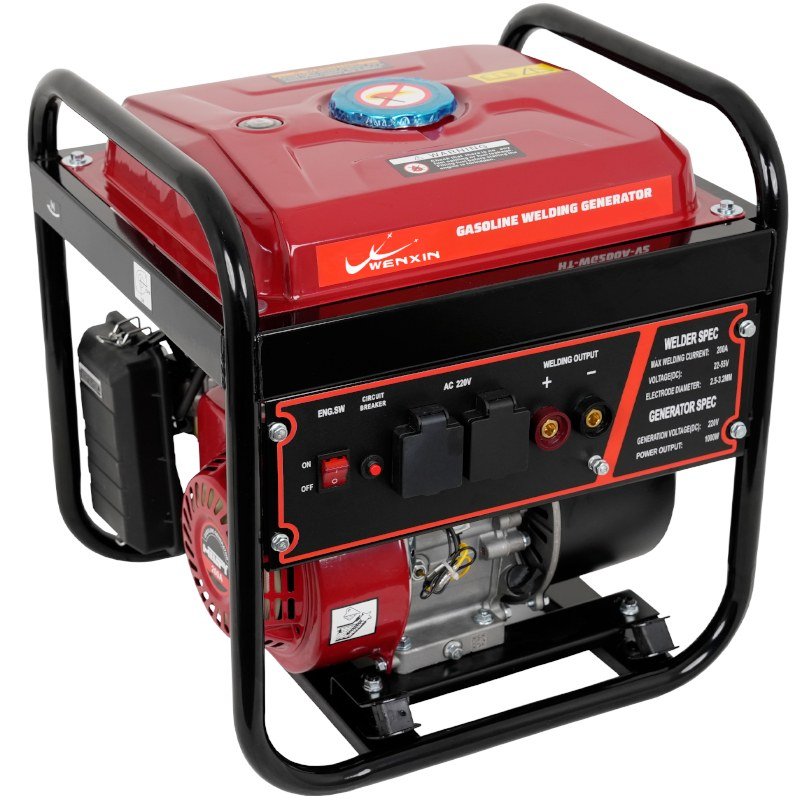
A generator welding machine does two jobs in one frame: it supplies welding current for stick welding, and it supplies general power for tools and lights. In India the same machine is also sold as a welding generator, a welder generator or a 2-in-1 welding generator. This guide explains who a generator welding machine is for, when it beats carrying a generator and a separate welder, how to size the welding side by electrode, and why the generator side deserves the same attention. The figures come from the published specifications of our own welder generators.
What Is a Generator Welding Machine, and Who Uses One?
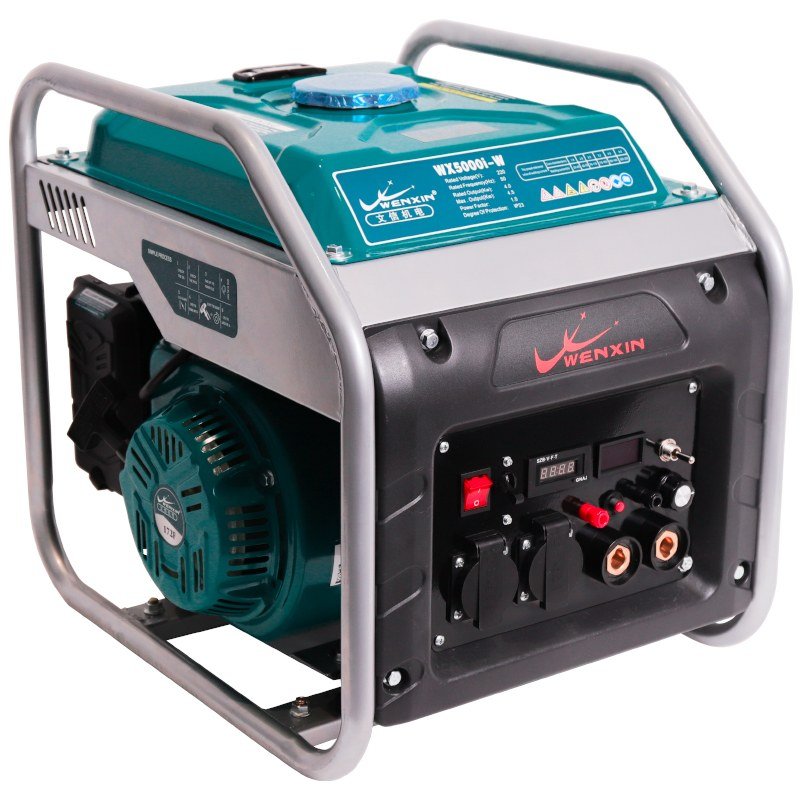
It is a generator and a stick welder built as one machine. The engine drives the generator, the welding output comes out on its own terminals, and the power sockets run everything else on site. The buyers are people who work where neither welding current nor mains power is otherwise available: pipeline and fencing crews, farm repairs, breakdown and recovery work, and remote construction and maintenance contractors.
For a distributor, a generator welding machine is a specialist line rather than a volume one. The customers are easy to identify, from mobile trades and agricultural repair shops to infrastructure maintenance teams, and they buy on capability rather than on price alone. That is good news for a dealer who can explain the specification, because the sale is made on fit, not on the lowest quote.
Should You Choose a Generator Welding Machine Over a Generator and a Separate Welder?
It is when the same crew both welds and runs tools. The alternative is carrying a generator and a separate welder, along with the cabling to connect them. For a crew working out of one vehicle, the case for a generator welding machine is simply that it takes a machine off the truck: one machine to fuel and freight instead of two.
The case reverses when the customer only needs power. A plain gasoline generator or diesel generator will be lighter and cheaper for the same output, and our guide to gasoline vs diesel generators covers that choice. A welder generator earns its place only when both jobs are genuinely needed on the same site, which is exactly the situation of patch-and-repair crews.
How Much Welding Current Does a Generator Welding Machine Need?
Welding output is the specification that matters, and it maps directly to electrode size. A machine rated at a lower current runs the smaller general-purpose electrodes; a higher-current machine runs a thicker rod for heavier section. In our welder generator range that relationship looks like this:
| Model | Generator output | Welding current | Electrode | Engine | Fuel tank / run time |
|---|---|---|---|---|---|
| 1kw Simple Inverter | 1 kW | 130 A | up to 3.2 mm | 170F, 212 cc | 10 L / about 5.5 h |
| 3.5kw ATM Type, 3.5 kW build | 3.5 kW | 130 A | up to 3.2 mm | 170F, 212 cc | 10 L / about 5.5 h |
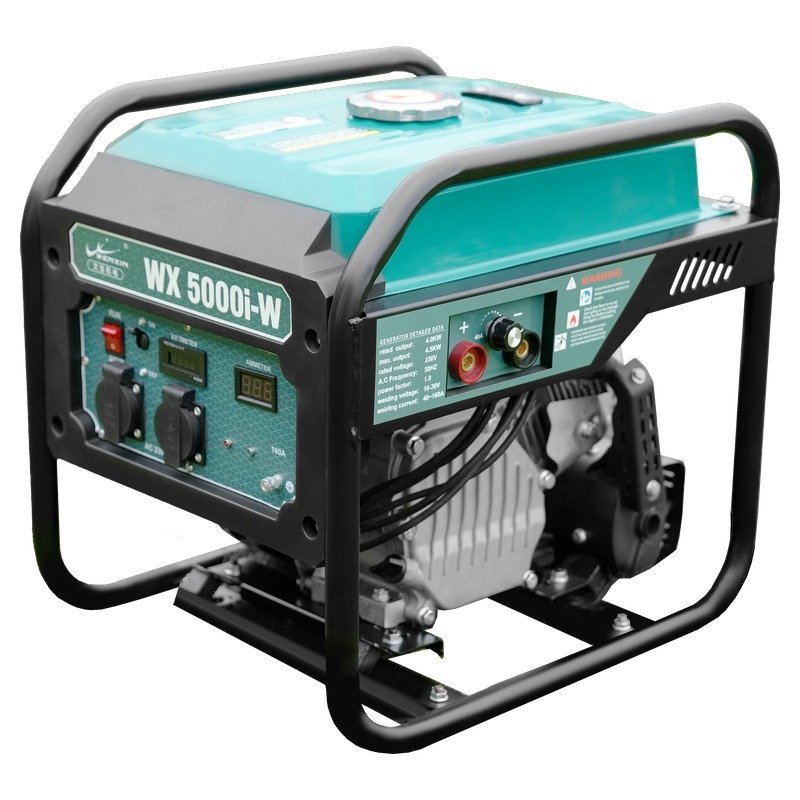
| 3.5kw ATM Type, 4.5 kW build | 4.5 kW | 160 A | up to 4 mm | 170F-1, 223 cc | 10 L / about 5.5 h |
That single relationship answers most enquiries. A crew doing light repair and tacking is well served by a 130 A machine on 3.2 mm electrodes; a crew welding heavier section needs the 160 A build and its 4 mm rods. No amount of generator output makes up for a machine that is under-specified on the welding side, so ask what the operator actually welds, and in what thickness, before looking at anything else. It is a faster route to the right generator welding machine than comparing kW figures across a catalogue.
Why Does the Generator Side Matter as Much as the Welder?
Because it does real work. On site the same machine powers grinders, lights, drills and chargers, and on most jobs it spends more hours supplying tools than striking an arc. The practical mistake is treating the power output as a bonus feature: a unit chosen only on welding current can disappoint on the other half of its purpose.
So size the generator side of a generator welding machine as you would a standalone generator. The 1kw simple inverter delivers 1 kW of generator output, while the 3.5 kW and 4.5 kW builds of the ATM type leave considerably more power for the tools around the job. All of them run 170F-series engines on a 10 L tank for about 5.5 hours per fill, so run time is not what separates them; output is.
Voltage is the other half of the power question. Our range includes the WENXIN type welder generator, the factory’s own-design model, built for dual-voltage supply to cover markets and sites that need both; its detailed ratings for the current production batch are confirmed at quotation.
What Should Distributors Confirm Before Ordering a Generator Welding Machine?
Confirm three things for your market before you order a generator welding machine: the electrode sizes and welding process your customers expect, the voltage and frequency standard, and the starting method. Welding conventions vary more between regions than generator conventions do, and assuming is expensive here.
Plan the consumables at the same time. Stock electrodes alongside the machine where your channel allows it: a welder generator customer is buying a capability, not an appliance, and the distributor who supplies what feeds that capability keeps the relationship.
We supply welder generators in inverter and conventional configurations across a range of outputs, with OEM and ODM support for brand, colour, packaging and specification. Tell us what your customers weld and what else they run on site, and we will point you to the generator welding machine that fits.
Sourcing sprayers, generators or water pumps?
Talk to the WENXIN factory team about specifications, customization and OEM orders.