



An HTP sprayer is a power sprayer built around a three-plunger pump. An engine or an electric motor drives the pump, and a hose and spray lance carry the liquid to the crop. In India the name covers everything from a bare pump head to a complete set on a frame, so two listings for an HTP sprayer can describe quite different products. This guide explains what the name refers to, how to size the pump, when a bare pump or a complete set makes more sense, and which power source fits, using the figures published for our own plunger pumps and sprayer units.
What Is an HTP Sprayer, and What Do the Letters Stand For?
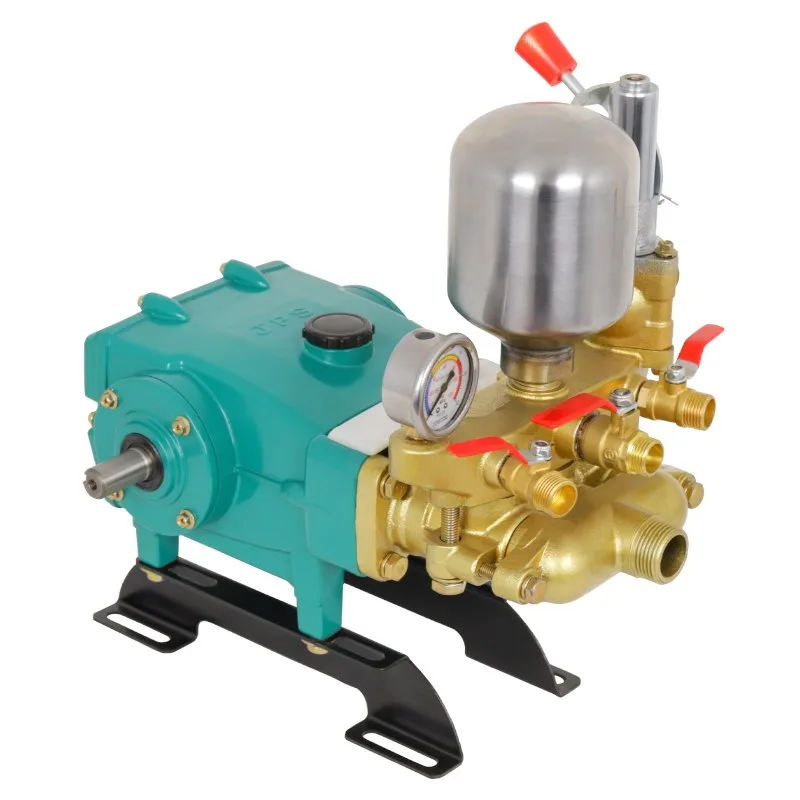
Sellers do not agree on the letters. Indian sellers spell HTP out in at least three ways: high-pressure triplex, horizontal triplex piston and high tension pressure. What every version shares is the pump: an HTP sprayer runs a triplex pump, with three plungers working in turn, so that while one draws liquid in, another is delivering, and the hose sees a steady stream rather than pulses. Every head in our plunger pump range is built this way, from the smallest, the 16, up to the 180; the models differ mainly in the diameter of those three plungers.
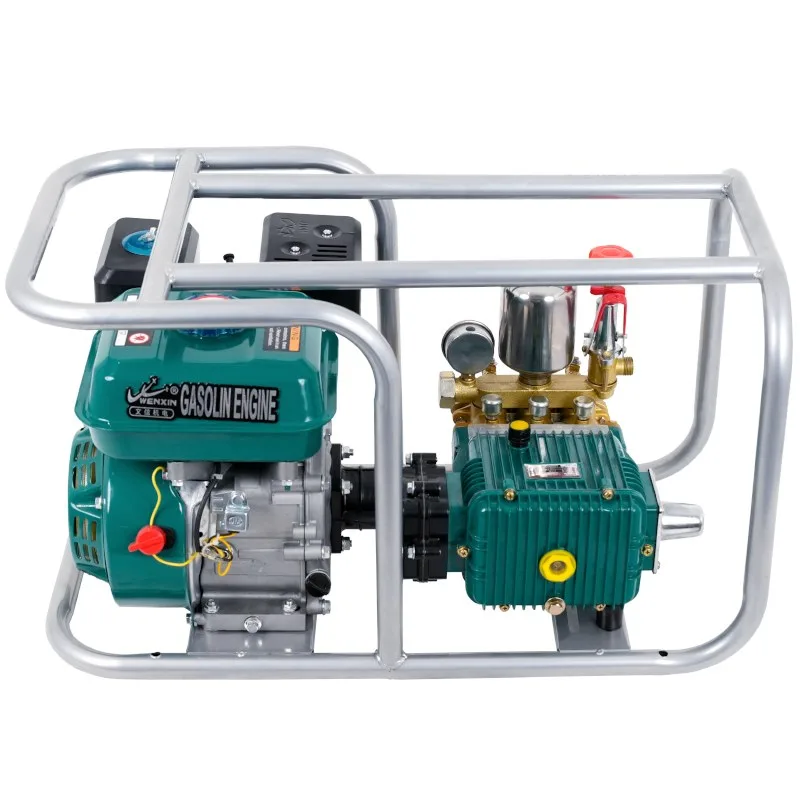
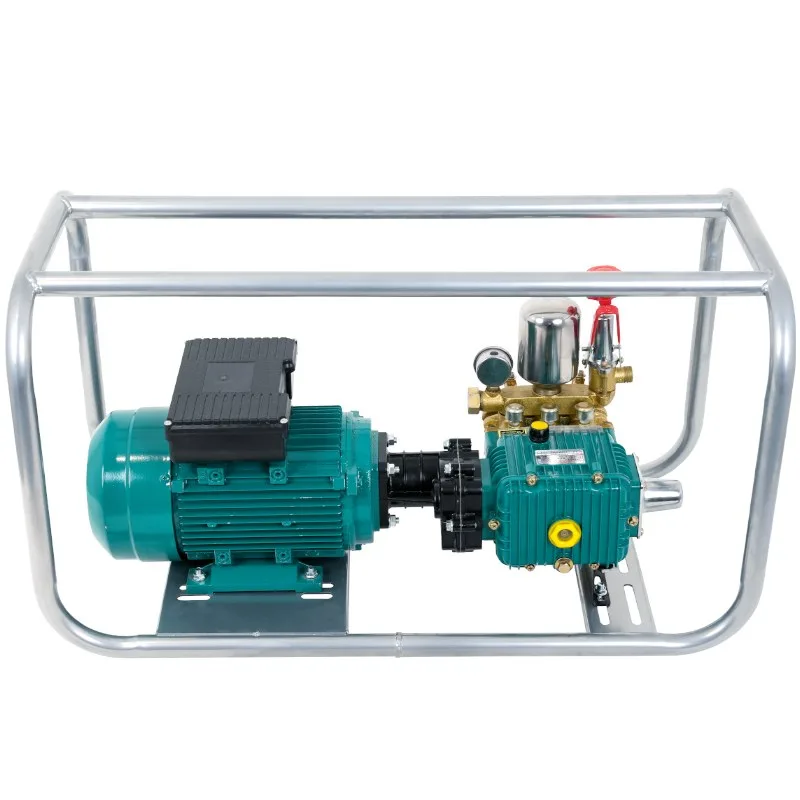
Around the pump, a complete HTP sprayer adds a power source and a frame. In our range the engine or motor, the plunger pump and the mounting are sold as one assembly, and the buyer adds the tank, hose and lance to suit the crop. Growers use these sets for orchard and field spraying, greenhouse treatment, disinfection and washing-down work, anywhere a fixed or trailed pressure source is more practical than a backpack.
Where Does an HTP Sprayer Beat a Knapsack Power Sprayer?
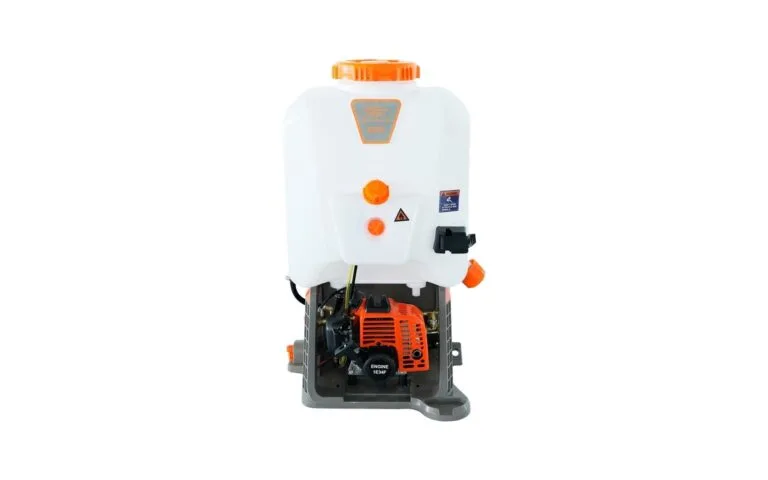
Wherever the job is larger than anything one person can carry. A knapsack power sprayer goes anywhere the operator can walk and is the right answer for scattered or awkward plots; our backpack models deliver 8 L/min with a 7–8 m spray range. An HTP sprayer trades that mobility for sustained output and longer hose runs from a fixed position. Our gasoline (petrol) sets deliver 22 L/min with the 22 pump or 40 L/min with the 30 pump, rated 0–4 MPa with a 0–8 m spray range. Large blocks, greenhouses and repeated daily work favor the set.
Because the frame decides how a set is moved and mounted, it is one of three choices, alongside the pump and the power source. Stretcher frames are carried between two people, cart frames are wheeled along rows, and hose reel frames stop long delivery hose from being dragged, kinked and cut. Our guide to the power sprayer for agriculture compares backpack, frame-mounted and complete-unit formats side by side.
Which HTP Sprayer Pump Size Is Right for the Job?
Pump heads are sold by type number, and Indian listings do the same with “22 No.” or “30 No.” pumps. In our range the number matches the plunger diameter only on the 16, 22 and 30, which run three plungers of 16, 22 and 30 mm. The JPS runs three 28 mm plungers, the 80 three 34 mm, the 120 three 38 mm, and the 150 and 180 three 45 mm. So compare an HTP sprayer pump by plunger size, flow and drive power rather than by its number:
| Pump | Plungers | Flow rate | Drive power | Suited to |
|---|---|---|---|---|
| 16 | 3 × 16 mm | 7–19 L/min | 0.6–1 HP | Single-lance work, small units |
| 22 | 3 × 22 mm | 14–22 L/min | 1.5–2 HP | Knapsack-scale and small trolley units |
| 30 | 3 × 30 mm | 33–40 L/min | 3–5 HP | Spray-rig builders |
| JPS | 3 × 28 mm | 33–44 L/min | 3–5 HP | Two-lance work, mounted units |
| 80 | 3 × 34 mm | 55–68 L/min | 5–7.5 HP | Multi-lance and orchard work |
| 120 | 3 × 38 mm | 103–116 L/min | 5–7.5 HP | Roughly double the flow of the 80 on the same power band |
| 150 / 180 | 3 × 45 mm | 107–120 L/min | 7.5–12 HP | Sustained duty, running slower |
All of these heads are rated 20–45 kg/cm², except the 150 and 180 at 20–35 kg/cm². Match the pump to the nozzles the machine will carry, not to the biggest number available: flow the nozzles cannot pass goes back through the relief valve, adding heat and wear without adding output. Our guide to how a plunger pump works explains the head itself.
Should You Stock HTP Pumps or Complete HTP Sprayer Sets?
That depends on who buys from you. The bare pump sells to assemblers building their own units and to dealers replacing a pump on a machine already in the field; every head in our range ships either as a bare pump or as part of a complete engine-and-frame set. A bare pump is a technical sale. Check the drive power the head needs, 1.5–2 HP for the 22 or 3–5 HP for the 30, and the speed it is meant to turn at: our catalog lists a speed range for every head, and direct-drive and belt-driven layouts suit different speeds and different frames. Confirm shaft, mounting and port specifications before ordering, since these decide whether the pump fits the customer’s frame at all.
A complete HTP sprayer set is bought as finished equipment rather than as components. The engine or motor, pump and frame come as one assembly, and on a direct-drive set such as the 22 30 direct-drive sprayer unit the pump is coupled straight to the engine shaft, removing the belt and its adjustment from the machine.
Which Power Source Suits an HTP Sprayer: Engine or Electric Motor?
A gasoline engine gives field independence; an electric motor suits sites where power supply is available. On our sets the power source does not change the flow. The 22 pump delivers 22 L/min whether a 6.5 hp engine or a 1.5 kW motor drives it, and the 30 pump delivers 40 L/min with either a 7.0 hp engine or a 2.2 kW motor. Only the listed spray range differs: 0–10 m for the 2.2 kW electric set against 0–8 m for the 1.5 kW set and the 22 and 30 gasoline sets. Choosing the power for an HTP sprayer is mainly a question of where it will work.
At the small end, the 152 16 rectangular frame sprayer unit pairs the smallest engine and pump in the range, 3.0 hp with the 16 pump at 19 L/min, for single-lance work and light orchard duty. On the electric side, the 1 5 22 2 direct-drive sprayer unit couples the pump straight onto the motor shaft with no belt.
What Should a Distributor Check Before Ordering HTP Sprayers?
Listings for an HTP sprayer include different parts, so compare quotations line by line:
- Pump: plunger count and diameter, flow and drive power, matched to your customers’ nozzles and lances.
- Head material: a stainless steel plunger pump where the liquid attacks a cast head, such as fertilizer solutions, disinfectant, or coastal and high-humidity service.
- What is included: our sets are engine or motor, pump and frame, and the buyer adds the tank, hose and lance; Indian listings sell sets with and without the hose and gun.
- Site and frame: the power source available on site, the frame type your customers expect, and their hose and reel requirements.
- Spare parts: seals, plungers, valves and gaskets, plus engine service parts. A distributor who can supply a seal kit keeps a machine in the field that would otherwise be replaced.
WENXIN supplies plunger pumps and complete sprayer units with OEM and ODM support for brand, color, packaging and specification. Tell us the flow, pressure and drive arrangement you need to match, and we will confirm which HTP sprayer pump or set fits.
Sourcing sprayers, generators or water pumps?
Talk to the WENXIN factory team about specifications, customization and OEM orders.