


A power sprayer for agriculture uses a small engine or an electric motor to drive the pump, so the operator no longer pumps by hand; compared with a manual sprayer, it is better suited to repeated agricultural work. For a distributor, the harder question is format. The same idea is sold as a backpack machine, as an engine-and-pump set on a frame, and as a complete sprayer unit that feeds a long hose from one position. This guide compares the three formats in our own range, using the figures published on our product pages, and shows how to match each power sprayer for agriculture to the farms your customers run.
What Types of Power Sprayer for Agriculture Can a Distributor Stock?
Our range splits into three formats. They share one working principle, a pump driven by an engine or a motor, but they differ in who carries what, and that difference decides which customers each one suits.
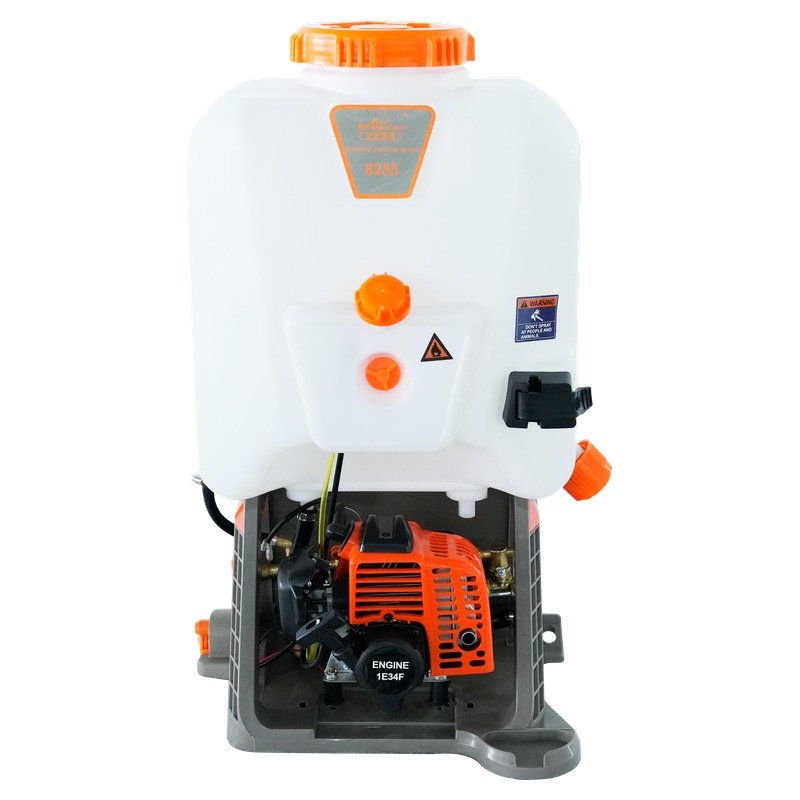
- Backpack power sprayer. Engine, pump and tank ride on the operator’s back, so the machine goes anywhere the operator can walk. Our knapsack power sprayer range is built around this format.
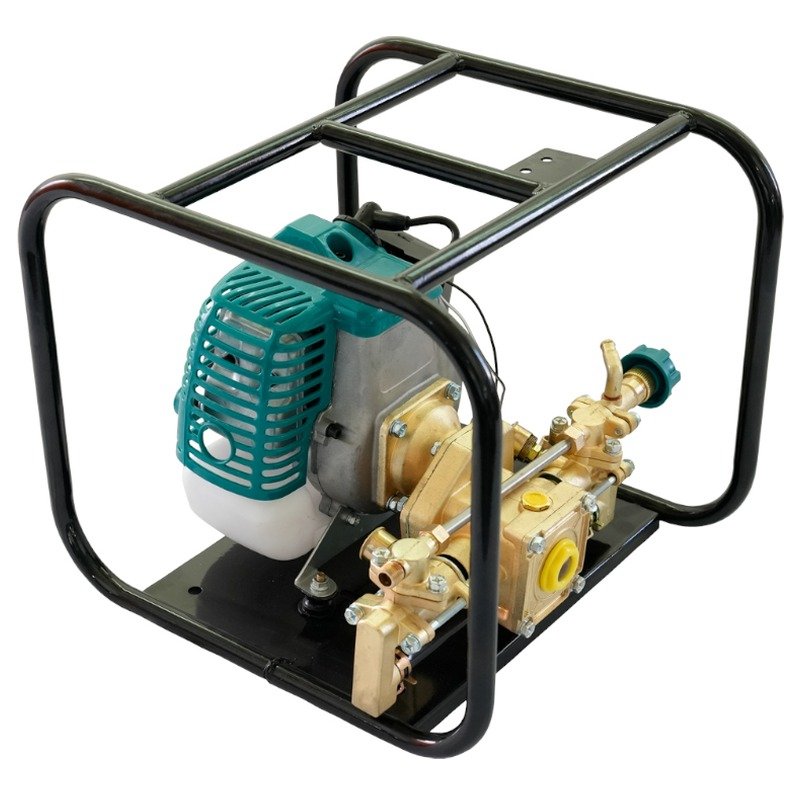
- Frame-mounted power sprayer. The same engine-and-pump set sits on a frame instead of a harness, and the buyer pairs it with the tank and lines of their choice.
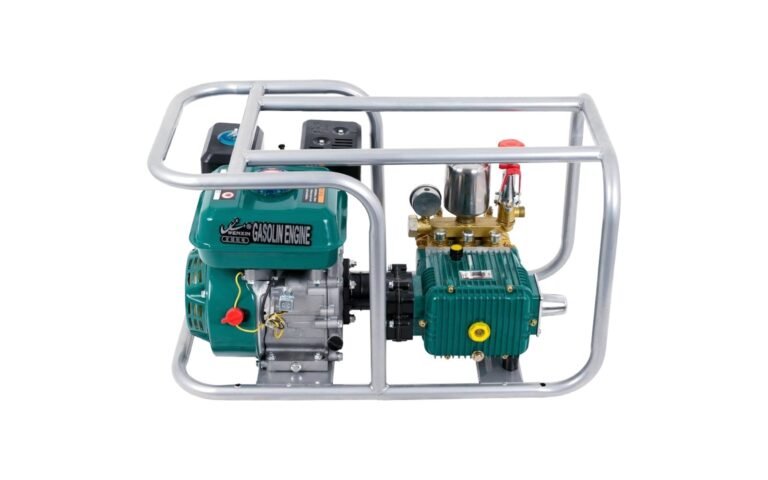
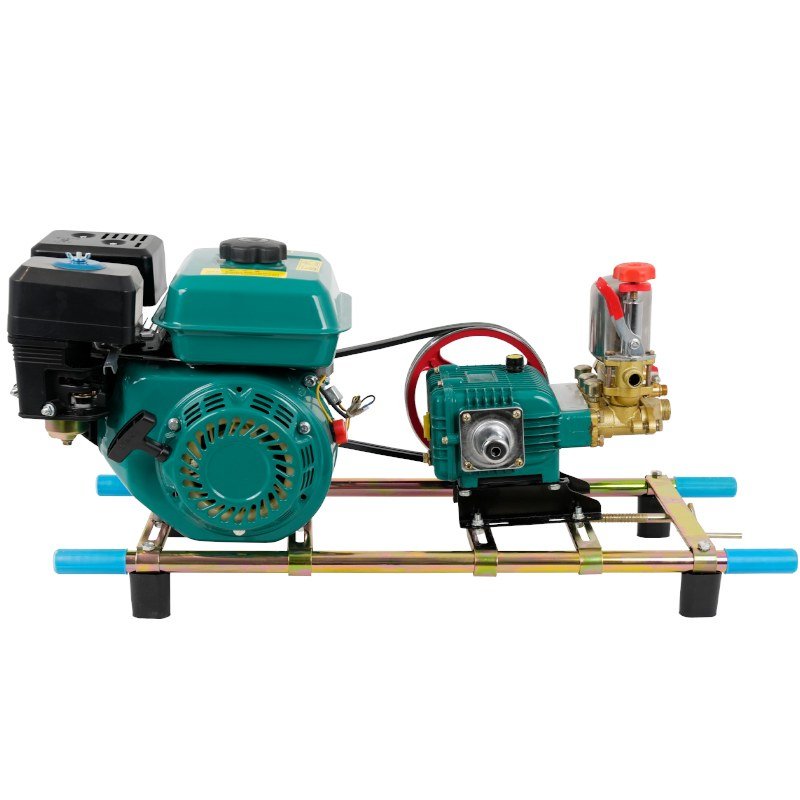
- Sprayer unit. An engine or an electric motor coupled to a plunger pump on a frame, sold as one assembly; the buyer adds the tank, hose and lance to suit the crop.
The dividing question is whether the operator should carry the pressure source or drag a hose from it. Carrying favours scattered, small or awkward plots. A fixed source with a long hose favours large blocks, greenhouses and repeated daily work.
How Does a Backpack Power Sprayer for Agriculture Perform?
A backpack power sprayer for agriculture is the mobile option. It suits orchards, nurseries and gardens, rows where the operator keeps moving while spraying, and plots that a wheeled machine cannot enter. On our models the working end is the same across the family: an 18 mm plunger pump delivering 8 L/min with a spray range of 7–8 m. What the buyer chooses is mainly the tank and the engine. Tanks run from 15 L to 30 L, and every capacity is customizable. On the 768 knapsack power sprayer, for example, a buyer picks a 20 L or 25 L tank and one of four engines, TU26, 34F, 139 or 35, for eight build combinations from a single frame.
When choosing a backpack power sprayer for agriculture, match tank size to the work rather than picking the biggest: a larger tank means fewer refill stops, a smaller one is easier to handle in confined areas. Match it to the refill points and the customer’s working routine. For nozzles, a set of interchangeable options is often more practical than one fixed nozzle when a single machine treats several crops.
When Is a Frame-Mounted Power Sprayer the Better Buy?
Some customers do not want the tank on the operator’s back. They already have their own tanks and lines, or they move between short spot jobs. For them, a frame-mounted power sprayer for agriculture keeps the same pump end without the harness. The portable power sprayer trades the backpack harness for a hand-carried format that moves between spot jobs quickly. The pump frame power sprayer leaves the choice of tank to the operator’s setup, and the square frame power sprayer seats the engine-and-pump set inside a squared frame that protects it in transit and stacks cleanly in storage. The all-in-one power sprayer packages engine and pump as one integrated unit for buyers who pair spray power with their own tanks and lines.
Performance does not drop when the harness goes. These frame models keep the 18 mm plunger, the 8 L/min and the 7–8 m of reach of the backpack family, so they slot into the same supply chain as the backpack models. For a distributor, one engine-and-pump family covers two quite different customers.
What Does a Sprayer Unit Add on Larger Farms?
A sprayer unit is the step up for customers who have outgrown carried equipment, and the highest-output power sprayer for agriculture in our range. It is a complete power-and-pump assembly: a gasoline (petrol) engine or an electric motor coupled to a plunger pump, with the frame deciding how the set is moved. Growers use it for orchard and field spraying, greenhouse treatment, disinfection and washing-down work.
Most of our gasoline units come with the 22 Plunger Pump at 6.5 hp and 22 L/min, or the 30 Plunger Pump at 7.0 hp and 40 L/min, both with three plungers and a 0–8 m spray range. Where power supply is available, electric builds pair a 2.2 kW motor with the 30 pump. Against the 8 L/min of a backpack machine, that is sustained output for longer hose runs.
Frames are not cosmetic. A stretcher frame has carry bars at both ends, the simplest way for two operators to lift the set between plots. A hose reel frame stops long delivery hose from being dragged, kinked and cut. Cart frames are wheeled along rows, and a V-shaped frame lowers the centre of gravity so the set sits steady on uneven ground. For pump detail, see how a plunger pump works.
How Should a Distributor Match a Power Sprayer for Agriculture to the Farm?
Start from how the equipment will be moved around the site, then choose the pump for the spraying requirement, then the power source for what is available. Three questions help sort an enquiry about a power sprayer for agriculture:
- Does the operator walk the rows? Scattered small plots, orchards and nurseries point to a backpack model.
- Does the customer already have tanks and lines? Then a frame-mounted model pairs engine power with the equipment they own.
- Is it a large block, a greenhouse, or daily work through a season? That is sprayer unit territory: gasoline for field independence, electric where supply is available.
The three formats serve different customers rather than competing for the same one, so a distributor can list every type of power sprayer for agriculture side by side, with the sprayer unit ready for customers who outgrow carried equipment. If a customer is weighing battery against engine power, our comparison of a battery sprayer for agriculture with a gasoline power sprayer covers that choice, and our mist blower vs. power sprayer guide covers the difference between those two machines.
What Spare Parts Should You Stock With a Power Sprayer for Agriculture?
A power sprayer for agriculture works hardest in the spraying season, exactly when a broken machine is hardest to replace, so plan a small stock of parts alongside the order:
- Pump wear parts: seals, plungers, valves and gaskets. A plunger pump is a serviceable component by design, and a distributor who can supply a seal kit keeps a machine in the field that would otherwise be replaced.
- Spraying parts: nozzles, hoses and connections, which operators should check after use for blockage, leakage or visible damage.
- Engine service parts for sprayer units, since a sprayer unit is expected to work every day through a season.
Before ordering, confirm the power source on the customer’s site, the frame type they expect and their hose and reel requirements; those details decide whether a unit gets used daily or left in the shed. WENXIN supplies all three formats with OEM and ODM support, including custom logo, color, labeling and carton design. Tell us the site and the working pattern of your customers, and we will point you to the configurations that fit.
Sourcing sprayers, generators or water pumps?
Talk to the WENXIN factory team about specifications, customization and OEM orders.