



An inverter generator for home use is a gasoline generator that conditions its output electronically, so it can run laptops, screens and anything with a control board that a conventional generator can upset. This guide covers that engine-driven machine, not a battery inverter. Choosing an inverter generator for home backup comes down to three things: rated output, run time per tank, and the build that suits where the unit will stand. Every figure below comes from our published product pages; noise levels and appliance wattages are not on our sheets, so we leave them out rather than guess.
What Is an Inverter Generator for Home Use?
It is the generator to choose when the household load includes electronics. Instead of relying on engine speed alone, an inverter generator conditions its output electronically, which makes it the right answer for laptops, measuring equipment, camera and audio gear, or anything with a control board. Because the engine can vary its speed with demand instead of holding a fixed rate, it is also quieter under light load and easier to carry, which is why residential backup sits on the same list as camping and market stalls.
The opposite case matters just as much. If the load is drills and floodlights, a conventional gasoline generator is usually better value, and our portable generator guide compares those styles. So for an inverter generator for home backup, the useful question is not whether to buy one, but which size, which tank and which build.
Which Inverter Generator Size Does a Home Need?
Size an inverter generator for home use for what runs at the same time, plus anything that draws extra current when it starts. Motors, compressors, pumps and refrigeration all demand more on start-up than while running, and a generator sized only for the running load will trip when they kick in. Add up the nameplates of the equipment that runs together, then leave room for the largest starting load.
Compare rated output rather than peak, because peak is a short-duration figure that no machine sustains. For an inverter generator for home, our range steps up from the 800 W and 1 kW open-frame units, through the 2 kW silent model, to three 3-4.5 kW families with four rated steps each: 3, 3.5, 4 and 4.5 kW. Portable use rewards the small end of that range. Backup use pushes buyers toward the larger open-frame configurations, where the priority shifts from carrying weight to running the essentials of a house through an outage.
How Do Our Inverter Generator Models Compare?
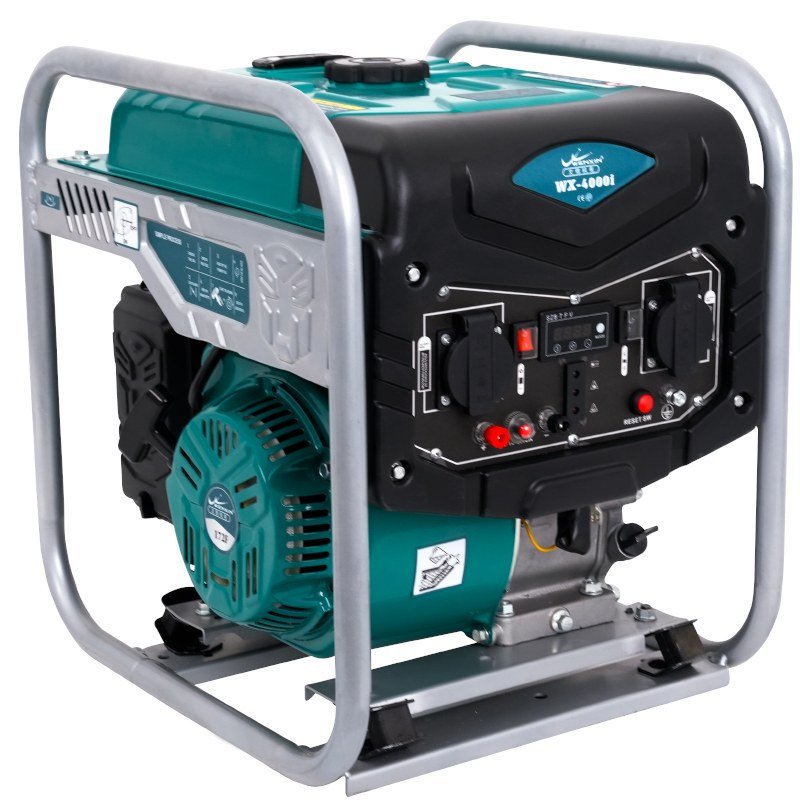
The table sets our seven inverter models side by side, grouped by build, so the trade-off between output, tank and size is easy to see before you shortlist an inverter generator for home use. The two 2 kW silent models share one build in two bodies, so they take one row.
| Model | Rated output | Fuel tank | Run time per fill | Carton (mm) |
|---|---|---|---|---|
| 800w Open Frame | 800 W | 3.4 L | Up to 4 h | — |
| 1kw Open Frame | 1 kW | 6 L | Up to 6 h | — |
| 2kw Silent / New Mold Type | 2 kW | 6 L | Up to 5 h | 532×340×512 |
| 3.0-4.5kw Kingkong Type | 3-4.5 kW | 7.5 L | 3.5-4.7 h | 445×385×470 |
| 3.0-4.5kw Open Frame | 3-4.5 kW | 10 L | 4.5-6 h | 520×365×495 |
| 3.0-4.5kw WENXIN Type | 3-4.5 kW | 15 L | 7-9 h | 520×420×500 |
Two notes on reading it. A dash means we do not have a confirmed figure for that model yet. And the three 3-4.5 kW families run the same 170F-series engines, so what really changes between them is the tank, the run time and the size of the carton.
That gives a simple way into the table. If the inverter generator for home backup has to run through a long outage, start from the 15 L WENXIN type at the bottom; if it has to be lifted and carried, start from the top rows and work down.
How Long Will an Inverter Generator for Home Run on One Tank?
Run time per fill depends on the tank and on the load. Two configurations with the same engine displacement can carry different tank sizes, and therefore quote very different run times, without either specification being wrong. Our 3 kW step shows it clearly: the same 212 cc engine runs up to 4.7 h on the 7.5 L Kingkong tank, 6 h on the 10 L open-frame tank and 9 h on the 15 L WENXIN type. Within one model, a higher rating means a shorter run, and the WENXIN type drops from 9 h at 3 kW to 7 h at 4.5 kW.
For an inverter generator for home backup, the tank decides how often someone has to refuel during an outage. Check run time at a stated load, not at no load, since the two can differ by hours. Gasoline suits occasional and portable use, while diesel suits continuous running, so if the house needs power for long stretches every week, read our guide to a diesel generator for home as well.
Should a Home Inverter Generator Be Silent or Open Frame?
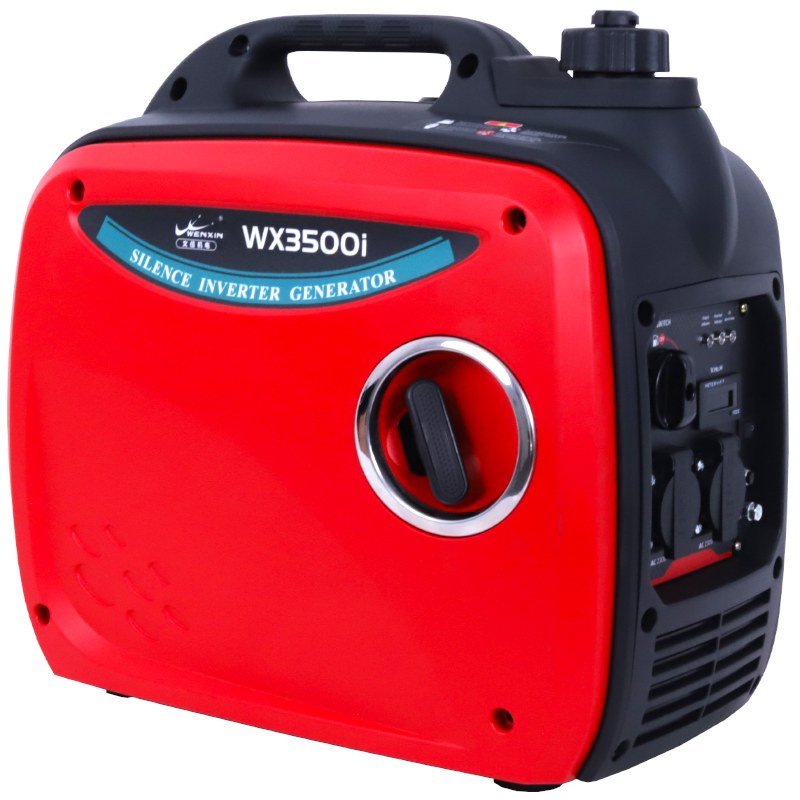
Pick the enclosed silent body, with its top carry handle, when an inverter generator for home has to be lifted and carried often, and an open frame when service access matters more. Our 2kw silent inverter generator wraps its inverter unit in a fully enclosed body, with a 98.7 cc 152F engine and a 6 L tank for up to 5 h. The same 2 kW build also comes in a second body cut from WENXIN’s own new molds. We do not publish decibel figures, so treat “silent” as a description of the enclosure, not as a number to compare.
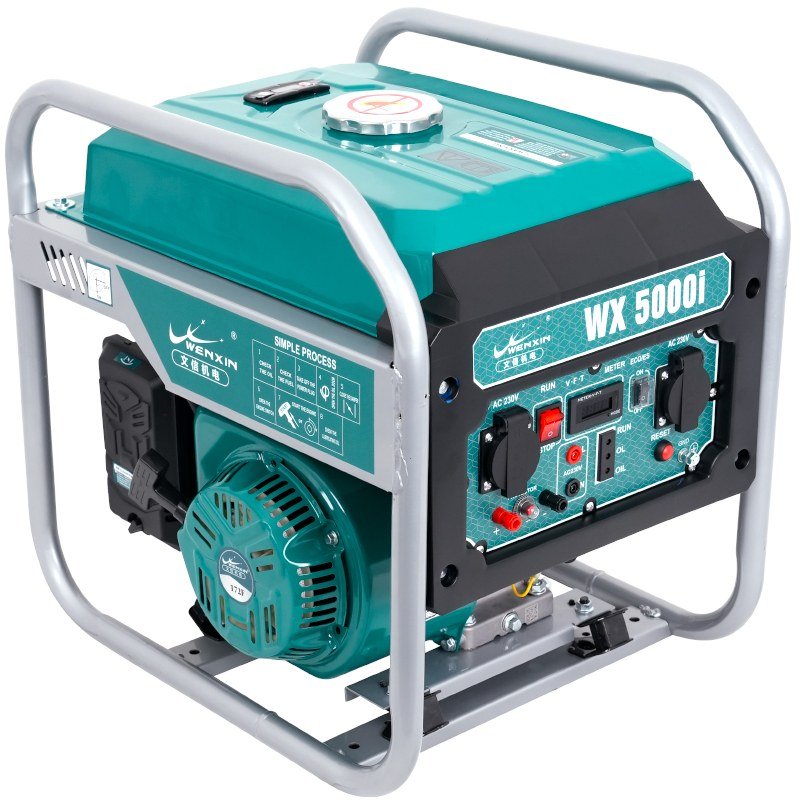
The open-frame models trade the enclosure for simple service access. Among the 3-4.5 kW families, Kingkong has the smallest carton at 445×385×470 mm, the open-frame type has the narrowest at 365 mm deep, and the WENXIN type keeps the full 15 L tank on every step. For an inverter generator for home that stays in one place and is serviced there, an open frame is the practical choice.
What Should Distributors Check Before Ordering an Inverter Generator for Home Use?
Confirm the electrical standard first. Our inverter models ship with 110V/220V output in 50Hz or 60Hz builds, and an inverter generator sold into the wrong standard is not adjustable on arrival. Confirm the socket type your customers expect at the same time, because getting either wrong is a common and entirely avoidable loss.
Then plan the channel. Inverter generators are frequently sold to end users rather than trade, so if an inverter generator for home buyers is going onto a shelf, retail packaging is not an afterthought. Plan spare parts with the first order too: recoil assemblies, filters and spark plugs are what keep a machine alive in the field. CE, RoHS and EPA certificates can be supported for our gasoline inverter generators, depending on model and destination market, and we support OEM and ODM orders for brand, color, packaging and specification. Tell us the loads your customers run and the channel you sell through, and we will point at the range that fits.
Sourcing sprayers, generators or water pumps?
Talk to the WENXIN factory team about specifications, customization and OEM orders.