



In India, an agriculture spray pump is the everyday name for a crop sprayer: a tank, a pump and a lance, carried on the back or in the hand. Our agriculture sprayer range covers every common type of agriculture spray pump: manual, foldable, battery-powered, engine-driven knapsack and mist duster. This guide compares them by the three things that decide the choice, namely how long the operator sprays, how far the spray has to reach and how far the operator walks between refills, and then covers tank size, nozzles and spare parts. Every figure comes from our published product pages; where a figure such as battery run time is not on our sheets, we leave it out.
Which Agriculture Spray Pump Fits the Job: Manual, Battery or Power?
Decide by spraying time and reach first; plot size comes second. Anyone pumping by hand continuously for more than about half an hour will want help from a motor, and that is the point where a battery model starts to pay for itself. Reach then sets the upper limit: a couple of meters is a small hand unit, three to five meters is a battery backpack, and anything beyond that from a carried tank needs an engine. The table sets our five types side by side.
| Type | Tank | Spray range | Flow rate | Driven by |
|---|---|---|---|---|
| Manual knapsack | 16 / 20 L | 2-5 m | 0.8-1.5 L/min | Hand pump |
| Foldable | 5-20 L | 1-3 m | 0.8-1.2 L/min | Hand pump |
| Battery backpack | 16-25 L | 3-5 m | 3-6 L/min | Battery |
| Knapsack power sprayer | 15-30 L | 7-8 m | 8 L/min | Engine |
| Mist duster | 14-30 L | 5-8 / 8-10 m | — | Engine and fan |
A manual agriculture spray pump sold to someone who needed a powered one comes back, and a powered one sold for a courtyard sits unused. For a distributor, one question about daily spraying time sorts most enquiries before price is even discussed.
When Is a Manual Agriculture Spray Pump Enough?
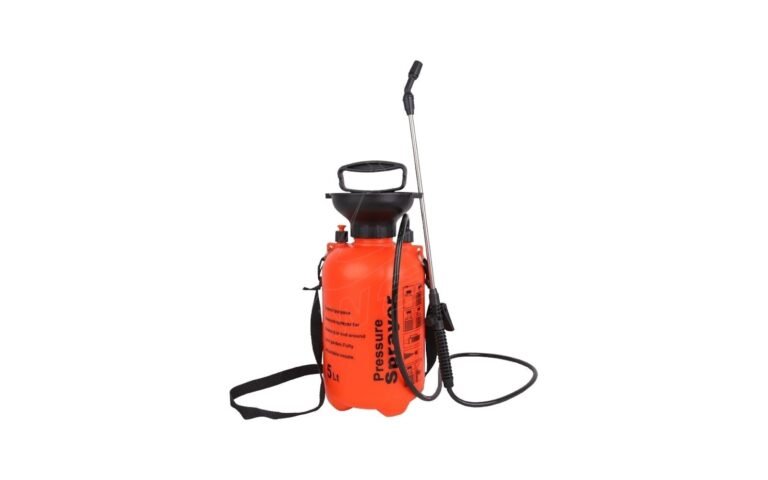
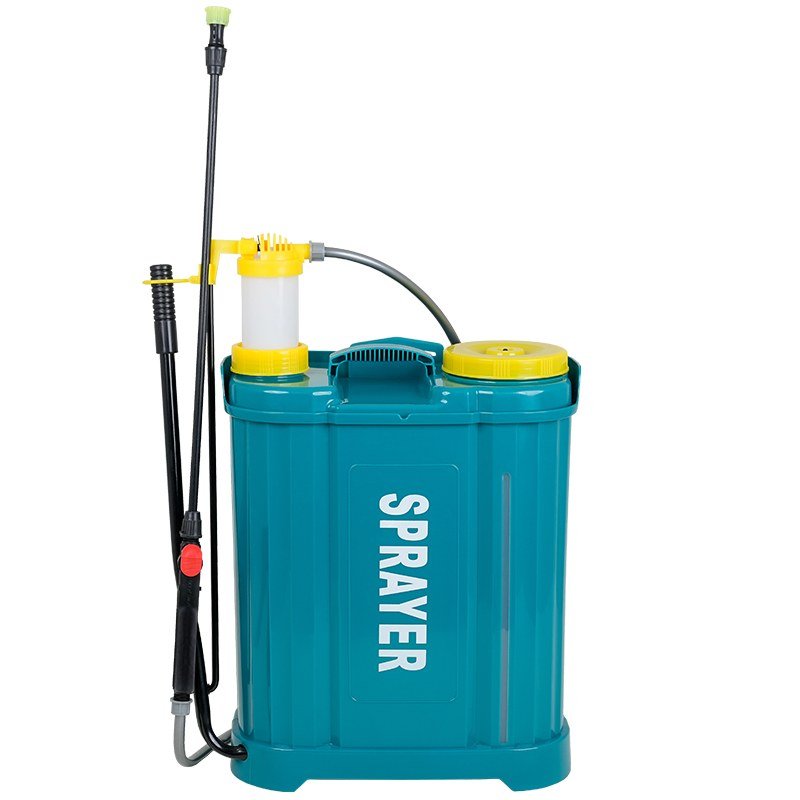
For small or occasional jobs, a manual agriculture spray pump is still the right buy. Home gardens, greenhouses, nurseries, small plots, disinfection and spot treatment between rows are its territory. It needs no fuel, no battery and no maintenance beyond rinsing, and the operator controls the pressure by pumping. Our manual sprayer knapsacks, including the 16L/20L Stripe Type Manual Sprayer, carry 16 or 20 L in PP tanks and work at 0.2-0.3 MPa with a 2-5 m reach and roughly 0.8-1.5 L/min. The 5L/8L Manual Pressure Sprayer covers closer work at 1-3 m.
If storage is the problem rather than spraying, a foldable sprayer collapses flat when empty. It works in the same low-pressure class, at 1-3 m and 0.8-1.2 L/min in 5 to 20 L sizes, but daily professional users are better served by a rigid tank. For bulk buyers, capacity, seal quality and packaging sell this category more than the data sheet does.
What Does a Battery Agriculture Spray Pump Change?
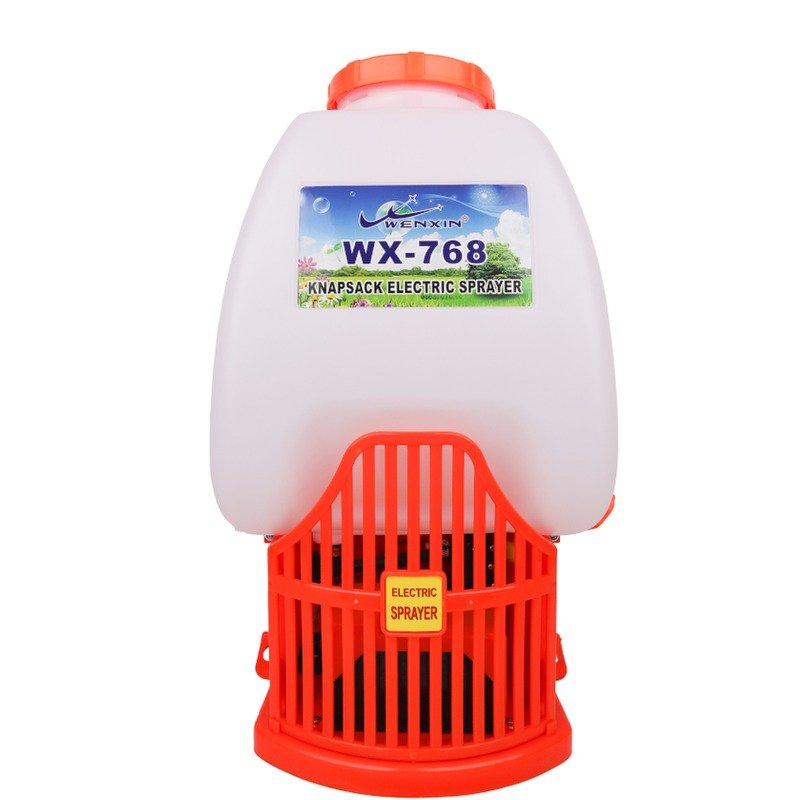
A battery agriculture spray pump takes the pumping away and holds the pressure steady. A hand-pumped tank delivers falling pressure between strokes; a battery-driven pump keeps it constant, which matters when the application has to be even rather than merely wet. Our electric sprayer backpack models carry 16 to 25 L and work at 0.3-0.6 MPa with a 3-5 m reach and 3-6 L/min of flow, well above the 0.8-1.5 L/min of a manual knapsack. The 25L 768 Electric Sprayer has the largest tank in the range, for operators who cover more ground between refills. At the small end, 2 L and 3 L lithium hand units reach 1-2 m for greenhouse and indoor work.
Before ordering, confirm the battery, charger and plug standard for the destination market; those details turn an otherwise correct shipment into a support problem. Our battery sprayer for agriculture guide compares battery and engine power in more detail.
When Does an Agriculture Spray Pump Need an Engine?
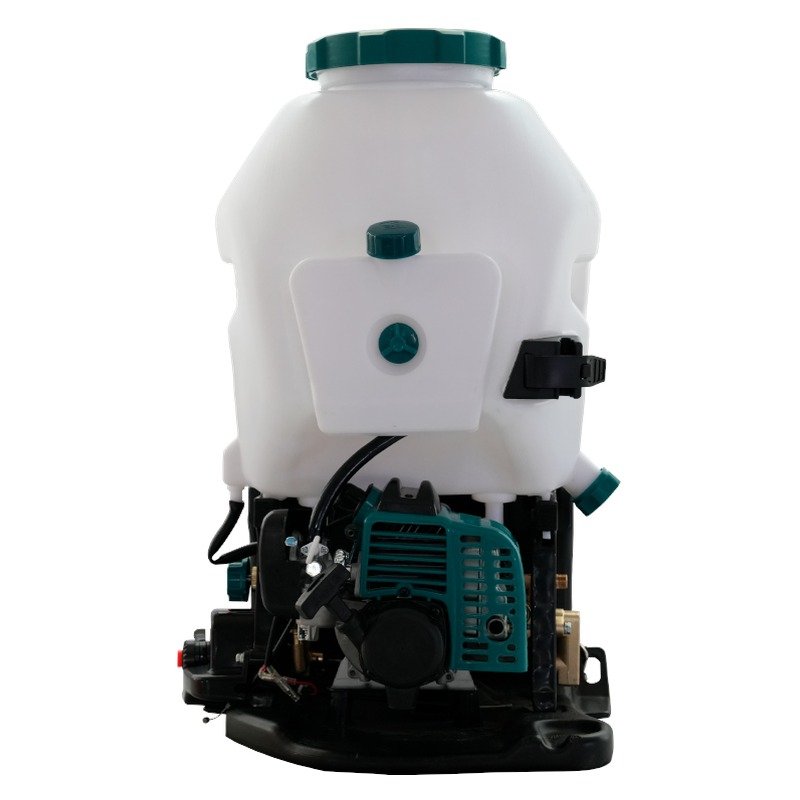
An agriculture spray pump needs an engine when the target is out of a battery unit’s reach or the work runs every day. If the job is on tall crops or needs more than about five meters of reach from a tank on the back, a battery model will disappoint however good the battery is. Orchards, tall crops and repeated daily spraying call for a knapsack power sprayer. On our models an engine of 0.7 to 0.85 kW drives an 18 mm plunger pump delivering 8 L/min with a 7-8 m spray range, and tanks run from 15 to 30 L, all customizable. The 505 knapsack power sprayer is built with a 20 L or 25 L tank and a brass spray gun as standard.
If the target is above head height or inside a canopy, a mist duster is the better tool: an engine-driven fan carries the spray in an air stream, rated at 5-8 m or 8-10 m depending on the engine. Our mist blower vs. power sprayer guide explains the trade-off.
What Tank Size Should an Agriculture Spray Pump Have?
Choose capacity by refills and handling, not by the biggest number. On a manual agriculture spray pump, capacity should follow how far the operator walks between refills rather than how much they can lift; a 20 L tank is heavy when full, and a customer treating a small plot usually prefers the smaller size after one season. On battery models the tank follows the pump: the hand units keep 2 or 3 L because their pump reaches only a couple of meters, while the backpack models carry 16 to 25 L because they can put that volume three to five meters away.
On engine-driven machines, a larger tank buys fewer refill stops, not more distance. On a mist duster, reach is set by the engine and blower, not the tank, and on a knapsack power sprayer a smaller tank is easier to handle in confined areas. Where refilling is the real limit, the Rechargeable Portable External Suction Sprayer has no tank and draws from a drum already on site, at 5-9 L/min with a 5-10 m reach.
Which Nozzles and Spare Parts Should Come With an Agriculture Spray Pump?
Seals and nozzles, whatever the type. A manual agriculture spray pump is judged on whether it leaks, and the customers who come back are the ones who could buy a replacement seal instead of a replacement sprayer. An electric unit that develops a drip is judged more harshly still, because the customer paid for a machine rather than a tank. On a knapsack power sprayer, match the nozzle to the crop and the target: a focused pattern directs spray at one area, a broader one gives more even coverage, and a set of interchangeable nozzles suits a machine that treats several crops.
Engine-driven models also need engine service parts, and a mist duster carries the consumables of both an engine and a spray system: nozzles, filters and hoses. For foldable models, tell customers to fold them clean and dry, since most durability complaints in that category trace back to storing them folded while wet. Our knapsack sprayer diagram shows which parts on each type can be changed.
What Should You Confirm Before Ordering an Agriculture Spray Pump?
Confirm the chemicals, the sales channel and the paperwork. Our manual and battery knapsack tanks are molded in PP, which resists common agricultural chemicals, but compatibility should still be checked against whatever the customer intends to spray. Manual and battery models are often sold off a shelf to end users, so retail packaging matters more than it does for engine-driven equipment. On certification, our manual, foldable and engine-driven sprayers are supported with CE; battery models can be supported with CE, UN38.3 and MSDS, depending on the model and battery type.
Where a customer has outgrown anything carried, a sprayer unit feeds a long hose from one position, and our power sprayer for agriculture guide covers that step. We support OEM and ODM orders, including logo, color, packaging and configuration. Tell us your target market, crop type and order volume, and we will recommend the agriculture spray pump models that fit, with full specifications.
Sourcing sprayers, generators or water pumps?
Talk to the WENXIN factory team about specifications, customization and OEM orders.