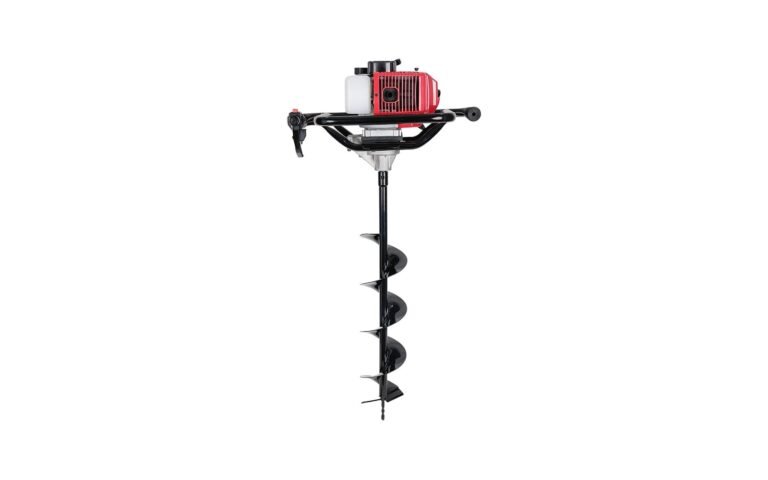




Every earth auger bit in our range is 800 mm long. That single fact settles half of the buying conversation before it starts, because the only dimension left to choose is diameter — 150, 200 or 300 mm — and the diameter decides how much engine the machine needs. This guide walks through the three earth auger bit sizes we supply, which jobs each one suits, and what the specification sheets say about the power unit behind each bit. Every number here comes from our published product data, not from an industry rule of thumb.
What Is an Earth Auger Bit, and What Do the Numbers Mean?
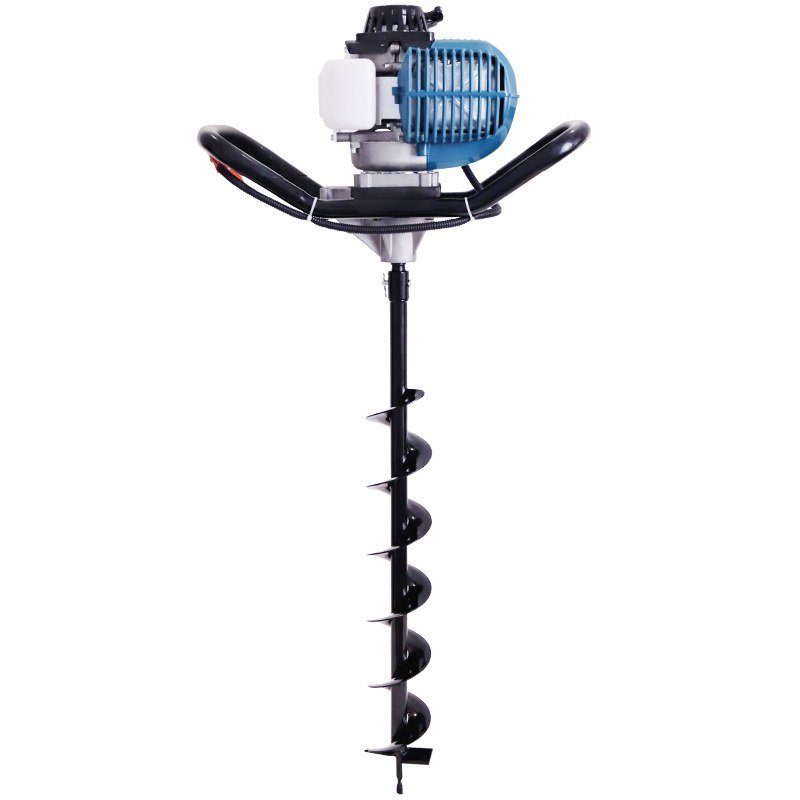
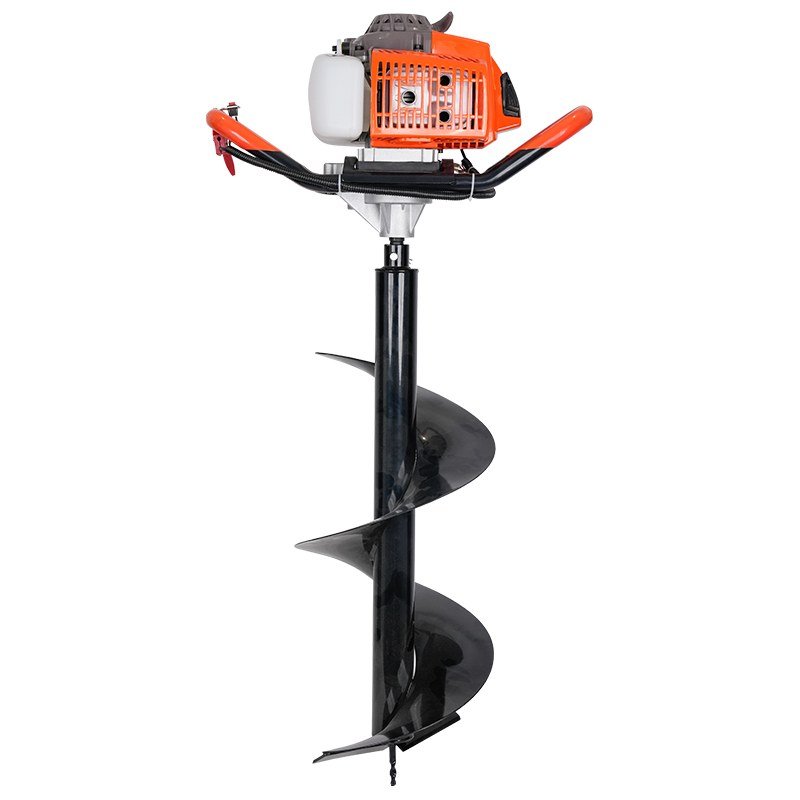
An earth auger bit is the spiral-flighted shaft that does the digging: a pilot point at the tip locates the hole, cutting edges at the bottom of the flight slice the soil, and the flight carries the spoil up and out as the bit turns. The power unit only supplies the rotation. Buyers who know the machine as a post hole digger are looking at the same component under a different name.
Bit sizes are written as diameter × length in millimeters. A 200 × 800 mm bit cuts a hole 200 mm across and is 800 mm long. Across our earth auger range the length is fixed at 800 mm on every model, so the figure that changes from one product page to the next is the first one. The ED431 and ED438 are supplied with a 150 × 800 mm bit, seven models from the ED430 up to the ED820 carry 200 × 800 mm, and the ED630 and BXS-630 are the two machines offered with a 300 × 800 mm bit. Each is a single-flight design and ships in its own carton, separate from the power unit.
Which Earth Auger Bit Diameter Do You Need for the Job?
Start from the hole, not the machine. The hole has to be wider than whatever goes into it, with room for backfill or concrete around a post, or for the root ball of a sapling, so the bit diameter follows from the post or plant size your customers work with.
On our range the three diameters map onto three kinds of work. The 150 mm earth auger bit on the ED431 and ED438 is sized for repeated narrow-diameter drilling: seedling planting, ground rods and irrigation stakes. The 200 mm bit — the most common size in the range — covers fence posts, tree pits and pole footings, which is why seven of our ten models are built around it. The 300 mm bit on the ED630 and BXS-630 is for tree pits and pole foundations, where a wider hole matters more than the number of holes drilled in a day.
If a customer needs holes deeper than the bit is long, tell us the depth before quoting. That is a configuration question, not a bigger-engine question.
How Much Engine Does Each Earth Auger Bit Size Need?
A wider bit removes more soil per turn and meets more resistance, so it needs more torque to keep turning. Our specification sheets show how engine size tracks earth auger bit diameter: the smallest engine behind each size steps up with it.
The 150 mm machines run the smallest engines in the range: 31 cc and 0.7 kW on the ED431, 35.8 cc and 0.85 kW on the ED438. The 200 mm group spans a wide band, from the 41.5 cc ED541 at the small end to the 82 cc ED820 at the top, with rated power running from 1.25 kW to 2.6 kW. The 300 mm bit is only offered on the 1E48F power unit — 63.3 cc, 2.3 kW — on both the ED630 and the BXS-630.
Two boundaries fall out of that table: no 150 mm bit is paired with anything above 35.8 cc, and no 300 mm bit with anything below 63.3 cc. Inside the 200 mm band, pick by ground — light soil suits the smaller engines, while stony or compacted ground rewards the reserve of the ED630 or ED820.
Does Two-Stroke or Four-Stroke Change the Bit Choice?
Not directly — an earth auger bit does not care what drives it — but the stroke type limits which bit sizes you can combine with which fuel arrangement, and that matters to fleets that keep one fuel type.
Both 150 mm machines are four-stroke, running on straight fuel with no oil mixing. Both 300 mm machines are two-stroke. Only the 200 mm group offers a choice: the ED450 (47.9 cc) and ED455 (53.6 cc) are four-stroke units rated 1.4 kW, while the ED430, ED520, ED541, ED630 and ED820 are two-stroke. The four-stroke side of the range stops at 53.6 cc and 1.4 kW; anything above that, including every 300 mm configuration, is two-stroke.
So a buyer who wants four-stroke and a 300 mm hole cannot have both from this range, and a buyer who wants the smallest-displacement 200 mm machine will be looking at the two-stroke ED541. For the general trade-offs between the two engine types, see our guide to 2-stroke vs 4-stroke engines.
Which Frame Goes With a Larger Earth Auger Bit?
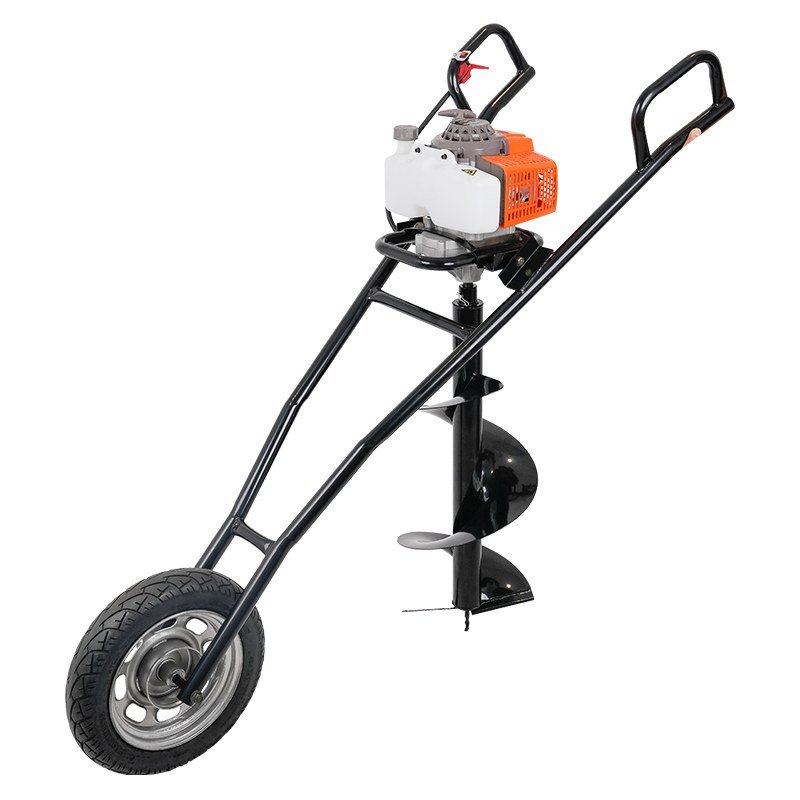
Bit diameter and frame are chosen together, because the reaction torque the operator has to hold grows with the bit. The 150 mm machines sit at the compact end of the range; the ED431 is the lightest unit we list. In the 200 mm group the frame options widen: the ED520 is offered with standard handlebar, twin-handle and rectangular frames, the ED541 with a standard handlebar or E-type frame, and the ED820 sits on a rectangular frame so two operators can hold the reaction torque together.
At 300 mm the frame question becomes decisive. The ED630 runs from a standard handlebar through twin-handle and rectangular frames to a two-operator outward-curved frame. The BXS-630 takes a different route: the same 63.3 cc power unit on a single-wheel barrow frame, so the machine carries its own weight between holes and the wheel absorbs part of the reaction torque while drilling. For crews drilling large-diameter holes all day, that is the configuration to show first.
How Should Distributors Stock Earth Auger Bits?
Treat the bit as the consumable it is. Cutting edges and pilot points wear, and a customer who cannot get a replacement earth auger bit locally will buy the next machine from whoever can supply one. The good news is that one length and three diameters make a small inventory: a 150, a 200 and a 300 mm bit cover every machine on this page.
Weight the stock toward 200 mm, since seven of the ten models use it, and confirm with your market which of the other two sizes actually sells. Bits pack separately from the power unit: a 200 mm bit ships in an 80.5 × 20 × 20 cm carton and the 150 mm bit in 80.5 × 15 × 15 cm, which keeps freight volume down.
Browse the full earth auger range, compare the ED630 and BXS-630 for large-diameter work, or send us the hole sizes and ground conditions your customers work with and we will point you at the right bit-and-engine pairing.
Sourcing sprayers, generators or water pumps?
Talk to the WENXIN factory team about specifications, customization and OEM orders.