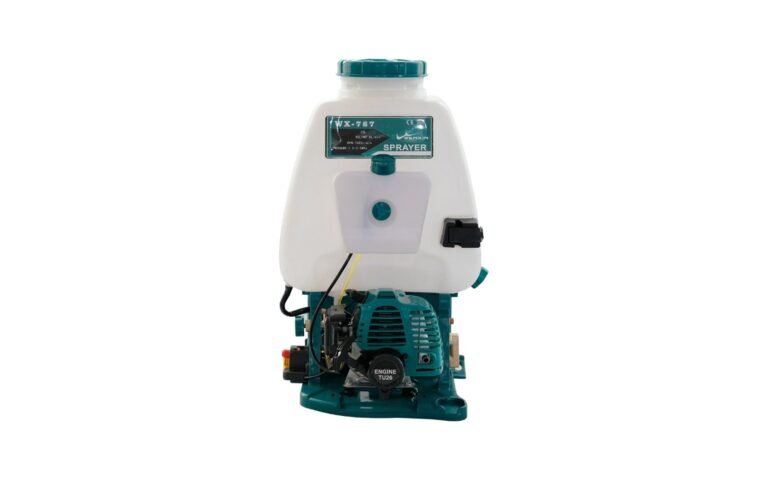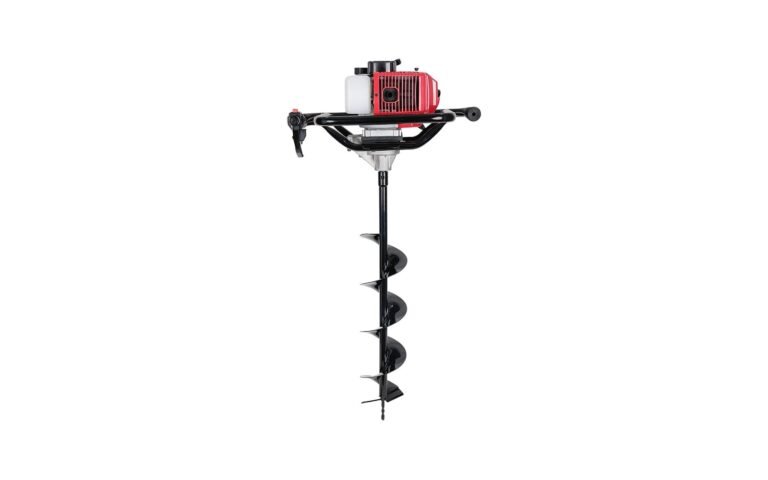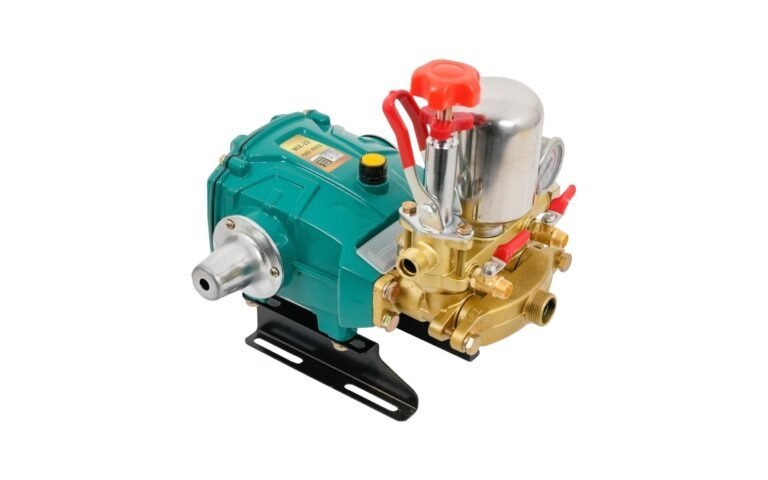




For most buyers the 2-stroke vs 4-stroke engine question is settled by one number: how much power the job needs. Across our own catalog both types start at the same 0.7 kW, but the two-stroke options stop at 2.6 kW while four-stroke units carry on to 8.5 kW. Above roughly 2.6 kW there is no decision left to make — nothing in the two-stroke range reaches that far.
Below that ceiling, on handheld and backpack tools, the 2-stroke vs 4-stroke call is genuinely yours to make. Every figure in this guide comes from the displacement and rated power published on our own product pages, not from a general rule of thumb.
What Does the 2-Stroke vs 4-Stroke Engine Choice Actually Change?
Three things: how the machine is fueled, what weight class it lands in, and how many power steps you can put in front of a customer.
As a general point of engine design, a two-stroke completes its power cycle in one crankshaft revolution and is lubricated by oil mixed into the fuel. A four-stroke takes two revolutions and carries its oil separately in a sump. That single difference drives everything downstream — a premix tank versus a separate oil fill, and a simpler top end versus more moving parts.
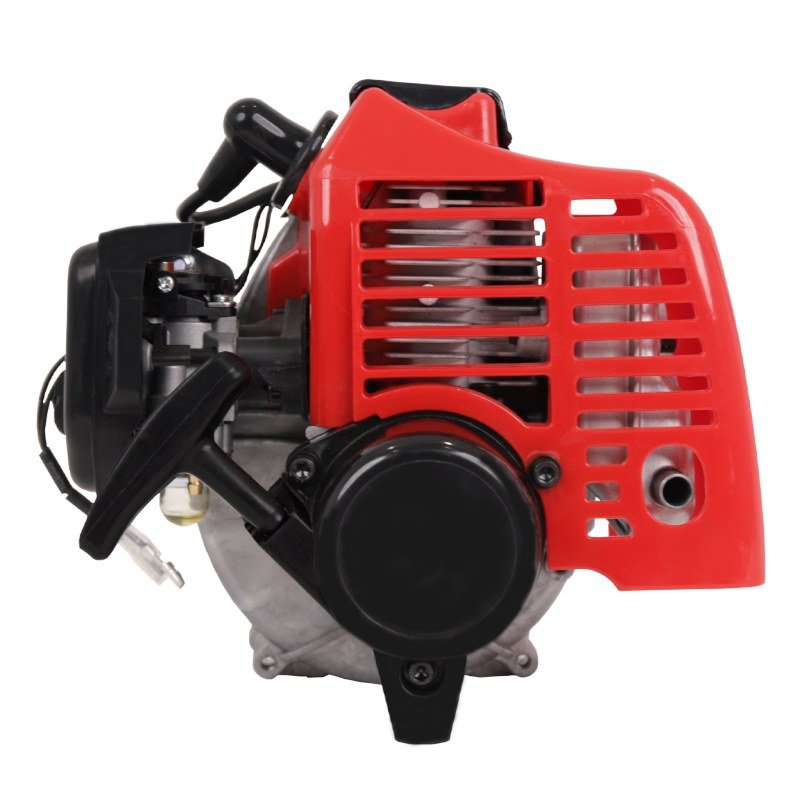
You can see where the 2-stroke vs 4-stroke split lands in our line without reading a single brochure claim. Every gasoline and diesel water pump we list is four-stroke, and so is the gasoline lawn mower. The handheld and backpack brush cutters are mostly two-stroke. Earth augers sit in the middle, with six two-stroke models and four four-stroke ones. Our gasoline engine range carries both: the TU26 and the 34 are two-stroke, while the 35 through 192 are four-stroke.
Which Tools Come in Both Two-Stroke and Four-Stroke?
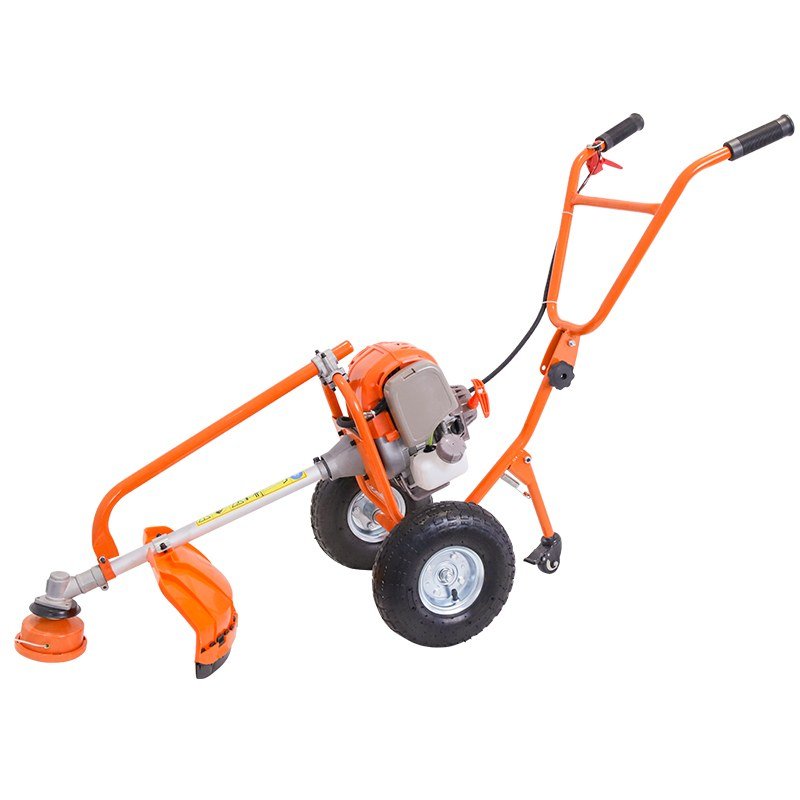
Three families, and they are the only place the 2-stroke vs 4-stroke decision is really yours to make: the side-mounted brush cutter, the backpack brush cutter, and the wheeled brush cutter.
The side-mounted unit shows the pattern most clearly. Its two-stroke ladder runs CG260 (25.6 cc, 0.75 kW), CG330 (32.6 cc, 0.85 kW), CG430 (42.7 cc, 1.25 kW), CG520 (51.7 cc, 1.4 kW), CG630 (63.3 cc, 2.2 kW) and CG820 (82 cc, 2.6 kW). Six steps. The four-stroke side of the same tool has two: CG431 at 31 cc and 0.7 kW, and CG450 at 47.9 cc and 1.4 kW.
The backpack version follows the same shape — three two-stroke configurations against two four-stroke ones. The wheeled version carries four two-stroke options and two four-stroke.
Does Two-Stroke Really Mean More Power per cc?
Not consistently — and this is worth checking before you repeat the usual 2-stroke vs 4-stroke rule of thumb to a customer.
Take the side-mounted brush cutter again. The two-stroke CG520 makes 1.4 kW from 51.7 cc. The four-stroke CG450 makes the same 1.4 kW from 47.9 cc — less displacement, same rated output. Go one step down and it flips: the two-stroke CG330 makes 0.85 kW from 32.6 cc while the four-stroke CG431 makes 0.7 kW from 31 cc.
So the 2-stroke vs 4-stroke figures in our spec table do not line up neatly behind a single principle. The practical takeaway for a buyer is simple: compare the published rated power of the specific model you are quoting, not the stroke count. Two engines of the same type can sit on opposite sides of the same power figure.
Why Is Every Water Pump Four-Stroke?
Because the requirement sits above the range where two-stroke options exist at all in this catalog.
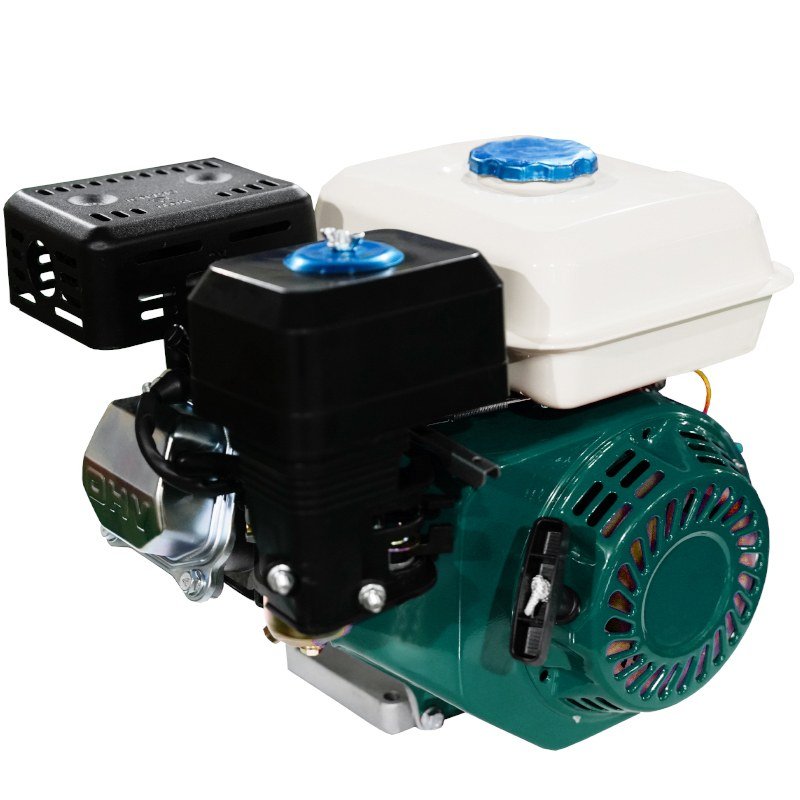
Our gasoline water pumps run from 1-inch through 6-inch and the diesel pumps from 2-inch through 4-inch. Every one of them is four-stroke, and there is no two-stroke water pump or lawn mower anywhere in the range. At the top end sits the 186 diesel engine at 531 cc and 8.5 kW, with the 192 gasoline engine close behind at 458 cc and 8 kW.
The two-stroke ceiling in the same catalog is 82 cc and 2.6 kW. There is no overlap up there at all. Once a buyer specifies a pump or a mower, the 2-stroke vs 4-stroke engine question has already been answered by the power band — which is why you will not find a two-stroke option listed on those pages.
How Many Power Steps Can You Actually Offer?
This is where the 2-stroke vs 4-stroke question stops being technical and starts being commercial — it matters if you are building a range rather than buying one machine.
The two-stroke side of our catalog covers nine distinct displacements — 25.6, 32.6, 32.8, 40.2, 41.5, 42.7, 51.7, 63.3 and 82 cc — spread across nine rated power values between 0.7 and 2.6 kW. That is dense coverage inside a narrow band, which is exactly what a dealer selling to landscapers and smallholders wants: a size for every budget without a gap.
The four-stroke side covers twenty-two displacements from 31 cc to 531 cc and seventeen rated power values from 0.7 kW to 8.5 kW. Far wider reach, coarser steps at the small end. Put simply, 2-stroke vs 4-stroke here is granularity versus range.
Which One Should You Stock?
Three rules cover almost every 2-stroke vs 4-stroke decision you will face.
If the application needs more than 2.6 kW, the answer is four-stroke and there is nothing to weigh up. If you are selling handheld or backpack cutting tools and want the finest ladder of sizes, the two-stroke range gives you more steps to sell against. And if you want to offer both on the same machine, the three brush cutter families are where that is possible — everywhere else the power band has already chosen for you.
Everything above comes from the specifications on our own product pages. If you are matching a range to a specific market and want the configuration list for a particular model, send us the details and we will confirm what is available.
Sourcing sprayers, generators or water pumps?
Talk to the WENXIN factory team about specifications, customization and OEM orders.