



A petrol engine water pump moves water where there is no power supply and no time to arrange one. Most catalogues, ours included, list it as a gasoline (petrol) water pump; buyers in India often search for the same machine as a petrol engine water pump. This guide explains what the machine is used for, how to choose a petrol engine water pump by port size, head and suction lift, and which configuration fits irrigation, drainage or dirty water. Every figure below comes from the published specifications of our own gasoline water pump range.
What Is a Petrol Engine Water Pump Used For?
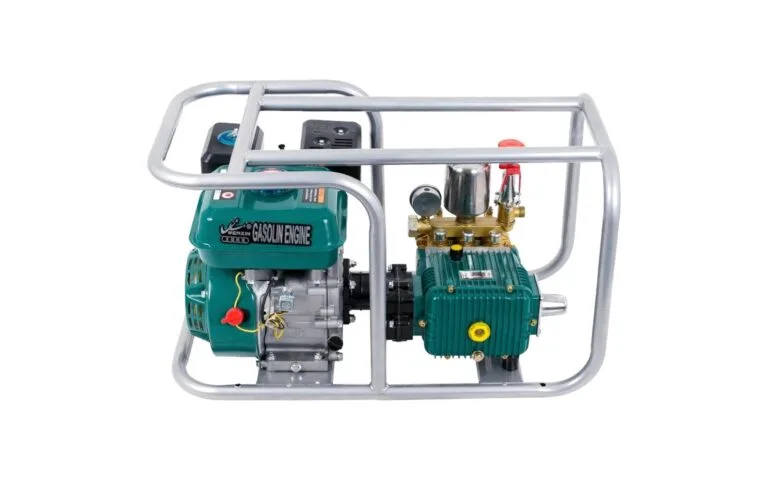
It is used wherever water has to move and mains power is not available: irrigation, drainage after flooding, filling and emptying tanks, construction dewatering, and fire-fighting support on rural properties. A petrol engine water pump is a gasoline engine and a pump on one frame, and every unit in our range runs on a four-stroke engine.
Its advantage is independence. The unit arrives, starts and works without wiring, which is why contractors and farms keep one on the truck. Where mains power is available and the pump stays in one place, an electric unit is usually cheaper to run; where it is not, a petrol engine water pump is the practical option. For bulk buyers, the useful question is what the customer is moving and how far, because clean water, muddy water and debris-laden water are different jobs.
Which Port Size Should a Petrol Engine Water Pump Have?
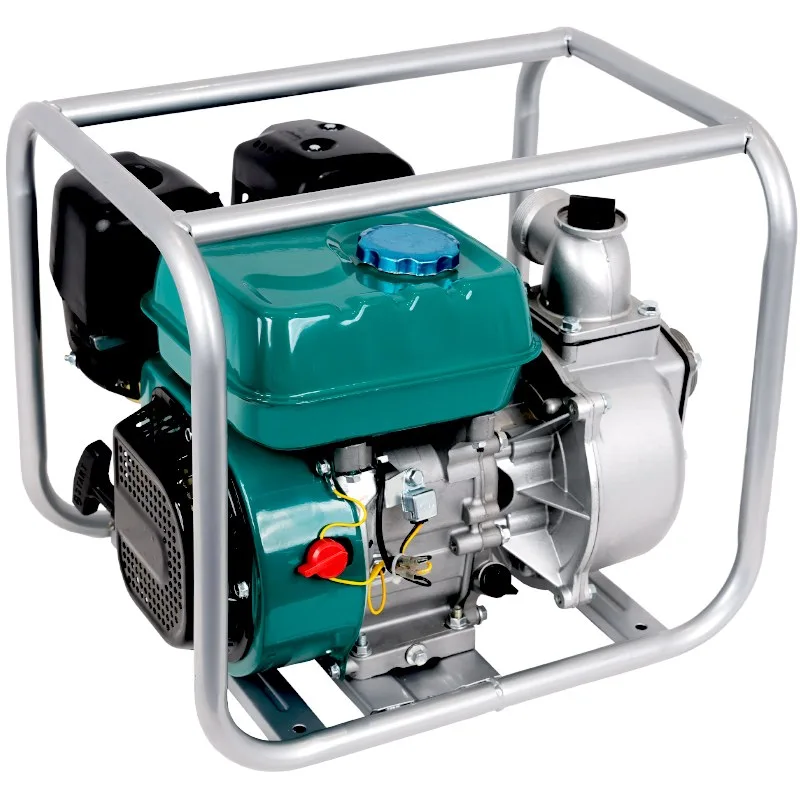
Port size sets roughly how much water can pass, so start there, then check head and suction lift before you decide. Our gasoline water pump range runs from 1 inch to 6 inches:
| Port size | Engine options | Rated power | Max head | Suction lift |
|---|---|---|---|---|
| 1 inch | 47.9 cc, 144F, BT 154F | 1.4 kW | 25 m | 7 m |
| 1.5 inch | 140F, BT 154F; 170 high-pressure | 1.0–1.4 kW; 4.2 kW | 25 m; 200 m | 7 m; 8 m |
| 2 inch | 167, 168 standard; 170 high-pressure; 170 chemical | 3.8–4.2 kW | 30 m; 65 m; 45 m | 8 m |
| 3 inch | 167, 170 standard and sewage; 170 high-head; 188, 190 high-pressure | 4.2–7.5 kW | 28 m; 45 m; 65 m | 8 m |
| 4 inch | 170 small; 177, 188, 190, 192 big | 4.2 kW; 6.5 kW | 26 m | 8 m |
| 6 inch | 190 | 7.5 kW | 26 m | 8 m |
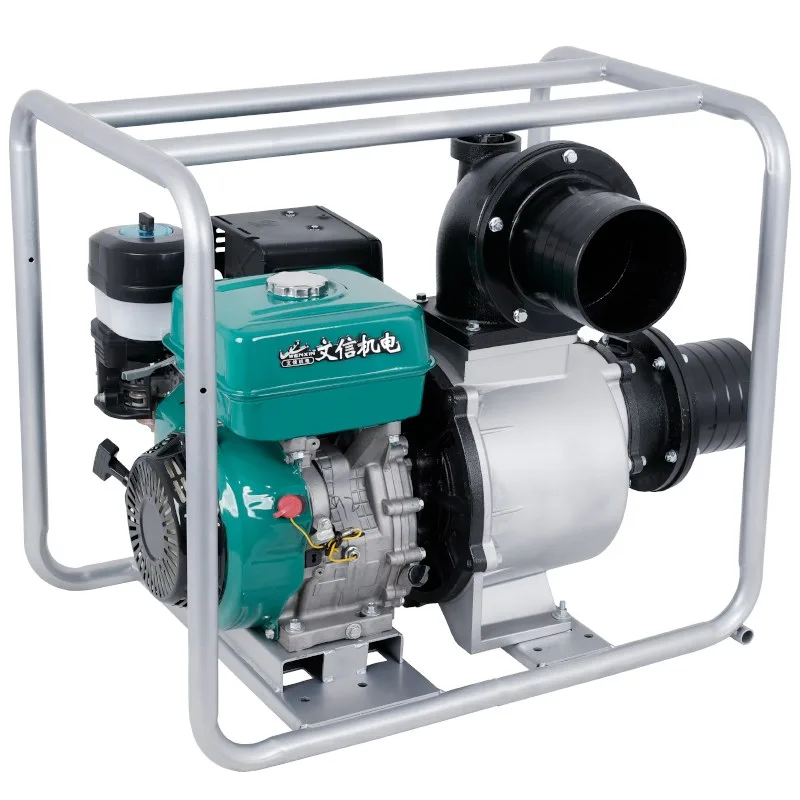
The two ends of the table serve different buyers. A 1 inch petrol engine water pump is light enough to carry between plots by hand for low-volume transfer. The big 4 inch builds, at 13 HP, are made for sustained high-volume transfer, and the 6 inch unit, at 15 HP, for drainage and irrigation work in bulk. In between, the 1.5 inch size spans two very different duties, and the 3 inch covers more duty types than any other size in the range, which is why the next two questions matter as much as the port.
How Much Head Does a Petrol Engine Water Pump Need?
Enough to cover the vertical lift and the hose run, which is why port size alone is the wrong way to order. Head sets how high or how far the pump can push water, and buyers who choose on port size alone are where most mismatched orders come from.
Our 2 inch range shows why. The same port size comes as a standard petrol engine water pump at 30 m and a high-pressure build at 65 m. The standard unit is built for volume at modest lift, the high-pressure unit for lift at lower volume: two machines, same connection, opposite jobs. The 3 inch range repeats the pattern at 28 m, 45 m and 65 m, and the 1.5 inch high-pressure build on a 170 engine reaches 200 m for long uphill runs.
So ask for the vertical lift and the hose length before recommending any petrol engine water pump. A pump sized only by port diameter will disappoint on at least one job.
Why Does Suction Lift Matter on a Petrol Engine Water Pump?
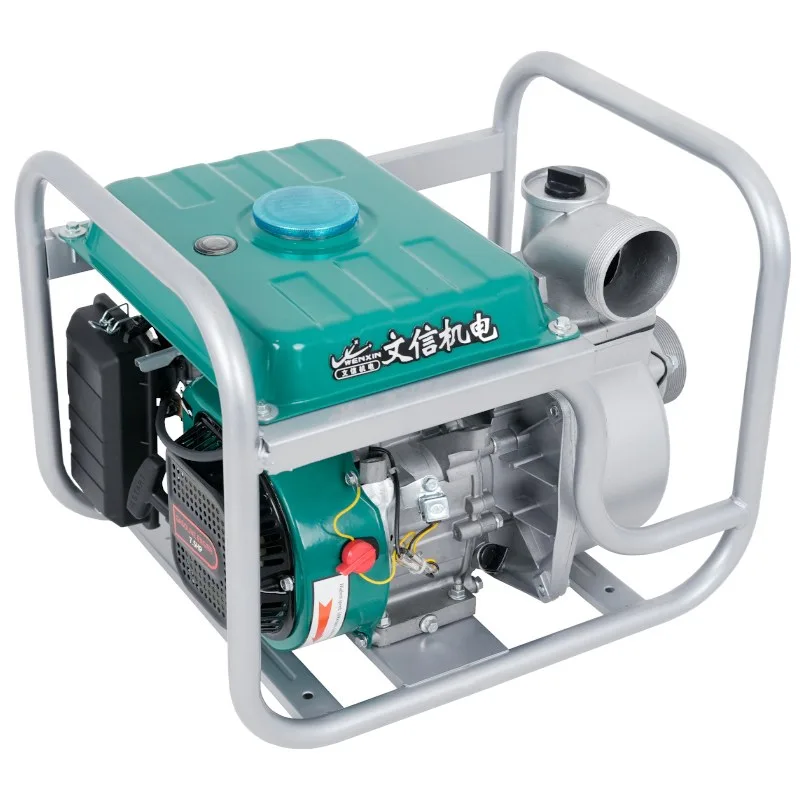
Because it decides whether the pump will prime at all. Every petrol engine water pump has a limit on how far above the water it can sit, and if that limit is exceeded the pump will not prime, no matter how powerful the engine is.
In our range the limit is 7 m on the small 1 inch and 1.5 inch builds rated 1.0–1.4 kW, and 8 m on the 1.5 inch high-pressure build and on every 2 inch, 3 inch, 4 inch and 6 inch unit. Treat the figure as a ceiling for where the pump can stand, not as a target.
Most after-sale complaints start here. Problems with a petrol engine water pump usually trace back to priming, to suction height, or to hose that is too long or too narrow for the head required. None are faults in the pump, and all can be avoided with two questions at the point of sale: how far above the water will the pump stand, and how high and how far must the water go?
Which Petrol Engine Water Pump Suits Irrigation, Drainage or Dirty Water?
Match the configuration to the water and the duty, not just to the port size. For irrigation, a petrol engine water pump usually needs volume at moderate head and often runs for long periods, so fuel consumption and ease of starting matter. Drainage after rain is the opposite: short, urgent, and frequently dealing with water that is not clean. Construction dewatering sits between the two and adds hard use, so serviceability and parts availability matter more than any headline figure.
Water condition narrows the choice further. Our 3 inch range includes a dedicated sewage version for solids-laden water, and the 2 inch range a chemical-duty build for corrosive liquids at 45 m. Abrasive water wears impellers, so distributors who stock impellers, seals and gaskets keep those machines running. Where the pump will run for sustained hours, compare it with a diesel unit; our diesel water pump for agriculture guide covers that choice.
What Should Distributors Confirm Before Ordering a Petrol Engine Water Pump?
Confirm three things for each customer group: the lift, the hose run and the water condition. Those answers decide the port size and the configuration, and they are the same three facts our team asks for before quoting a petrol engine water pump.
Then confirm the market details, starting with certification. CE certification can be supported for gasoline water pumps, though availability varies by model and destination market, so check it for your country before you order. We supply gasoline water pumps across port sizes, in standard and high-pressure configurations, with OEM and ODM support for brand, colour, packaging and specification. Tell us the lift, the hose run and the water condition, and we will point you to the configuration that fits.
Sourcing sprayers, generators or water pumps?
Talk to the WENXIN factory team about specifications, customization and OEM orders.