



A 4 stroke brush cutter keeps its engine oil in a separate sump and runs on straight gasoline (petrol), while a 2 stroke brush cutter burns oil that is mixed into the fuel. For an importer the practical question is which of the two to stock, in which format, and at what power. This guide answers it with the figures from our own catalog: every 4 stroke brush cutter and every 2 stroke build in our catalog, across the backpack, side-mounted and wheeled formats.
- 4 stroke brush cutter options: two engine sizes, 31 cc at 0.7 kW and 47.9 cc at 1.4 kW, offered in all three formats.
- 2 stroke options: from 25.6 cc and 0.75 kW up to 82 cc and 2.6 kW.
- Power ceiling: above 1.4 kW, every build in our range is a 2 stroke.
- Formats: backpack, side-mounted straight shaft, and wheeled walk-behind.
What Is a 4 Stroke Brush Cutter and How Does It Differ From a 2 Stroke?
A 4 stroke brush cutter is a brush cutter driven by a four-stroke gasoline engine. In general, a four-stroke engine completes one working cycle in two turns of the crankshaft and carries its lubricating oil in a separate sump, so the operator fills the tank with straight gasoline. A two-stroke engine completes the cycle in one turn and is lubricated by oil mixed into the fuel, so the operator has to prepare the mix before every refill. Those are general engineering facts, not performance claims for a particular model.
On our side-mounted line, the two-stroke and four-stroke builds sit on one shaft platform, with the engine at one end and the cutting head at the other. Our earlier guide to 2-stroke vs 4-stroke engines compares the two engine types across several tool lines, water pumps included; this article stays with brush cutters.
Which Brush Cutter Formats Come With a 4 Stroke Engine?
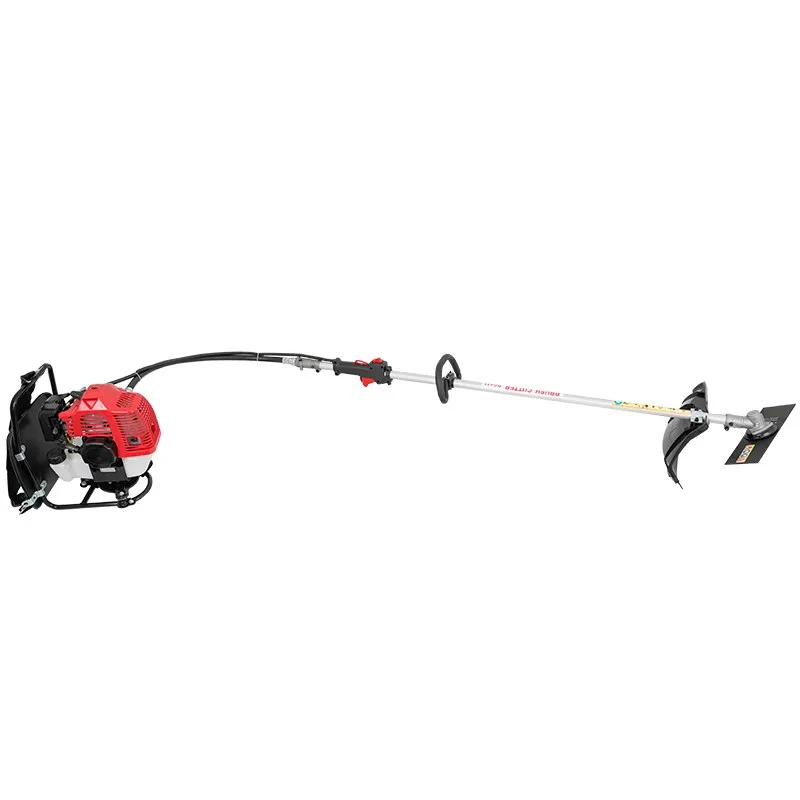
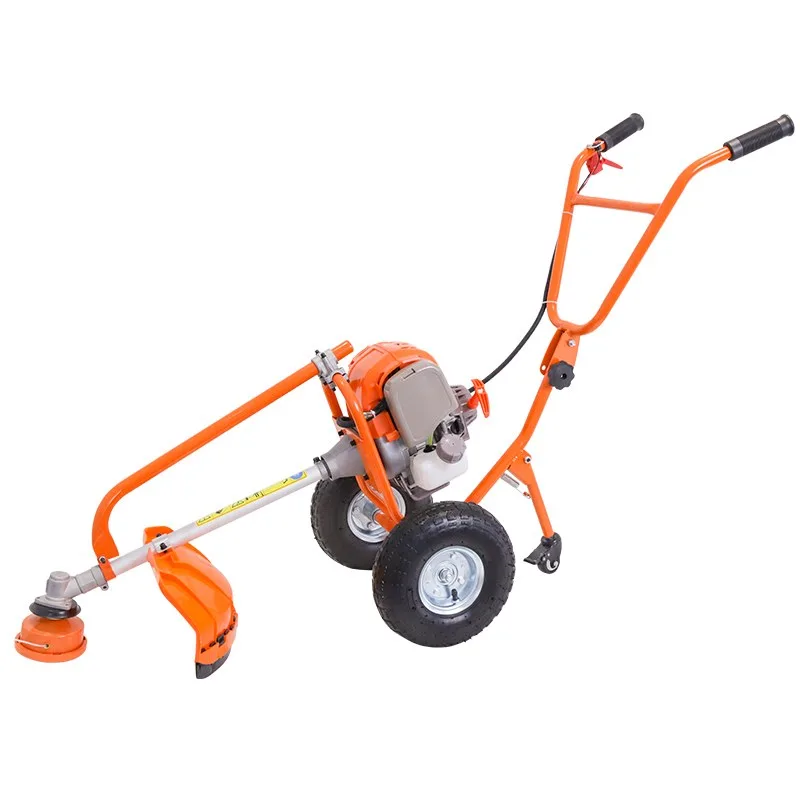
All three of our formats do, and they use the same two engine sizes. The backpack brush cutter offers the BG431 at 31 cc and 0.7 kW and the BG450 at 47.9 cc and 1.4 kW. The side-mounted brush cutter offers the CG431 and the CG450 with the same displacement and power. The wheeled brush cutter is built with the 139F-H engine at 31 cc and 0.7 kW or with a 47.9 cc engine at 1.4 kW.
For a distributor this keeps the 4 stroke brush cutter program simple: one small engine and one larger engine, in whichever format the operator prefers: on the back, on the side, or pushed on wheels. The 2 stroke side of the catalog is wider. The backpack format has three two-stroke builds, the side-mounted format has six, and the wheeled format has four, so a buyer who wants many power steps in one format will find them among the two-strokes.
How Much Power Does a 4 Stroke Brush Cutter Deliver Compared With a 2 Stroke?
In our range a 4 stroke brush cutter delivers 0.7 kW or 1.4 kW, whichever format it is built into. The 2 stroke builds start at 0.75 kW and go much higher. The catalog figures, format by format:
| Format | 4 stroke builds | 2 stroke builds |
|---|---|---|
| Backpack | BG431: 31 cc, 0.7 kW BG450: 47.9 cc, 1.4 kW | BG328: 32.8 cc, 0.85 kW BG430: 42.7 cc, 1.25 kW BG520: 51.7 cc, 1.4 kW |
| Side-mounted | CG431: 31 cc, 0.7 kW CG450: 47.9 cc, 1.4 kW | CG260: 25.6 cc, 0.75 kW CG330: 32.6 cc, 0.85 kW CG430: 42.7 cc, 1.25 kW CG520: 51.7 cc, 1.4 kW CG630: 63.3 cc, 2.2 kW CG820: 82 cc, 2.6 kW |
| Wheeled | 139F-H: 31 cc, 0.7 kW 47.9 cc build: 1.4 kW | 40-5: 42.7 cc, 1.25 kW 40-6: 40.2 cc, 1.5 kW 1E44F-5J: 51.7 cc, 1.4 kW 1E48F: 63.3 cc, 2.3 kW |
At 1.4 kW the buyer has a real choice: the CG450 reaches it with a 47.9 cc four-stroke, the CG520 with a 51.7 cc two-stroke. Above 1.4 kW, every build is a two-stroke.
Which Brush Cutter Is Best, 2 Stroke or 4 Stroke?
Neither is best in every market, and the rated figures above settle most of the decision. Start with power. If your growers clear heavy brush and ask for more than 1.4 kW, the answer in our range is a 2 stroke: the CG630 and CG820 on the side-mounted platform, or the 40-6 and 1E48F wheeled builds. If 0.7 kW or 1.4 kW covers the work, a 4 stroke brush cutter becomes an option in every format.
Then look at fuel habits. In general, a two-stroke needs oil measured into the gasoline at every refill, and a four-stroke needs straight gasoline plus an oil level check. Ask which habit your operators already have before you decide. Do not choose on the stroke count alone: compare the rated power of the exact models, as the 1.4 kW pair above shows.
Should You Choose a Backpack, Side-Mounted or Wheeled Format?
The format decides who carries the engine. The backpack brush cutter moves the engine’s weight off the operator’s arms and onto a shoulder harness and feeds the cutting head through a flexible drive, the configuration crews choose for long sessions on slopes and rough ground. The side-mounted brush cutter is the classic straight-shaft format, balanced across a side harness for sweeping cuts through grass and brush, and it covers the widest power range on one shaft platform. The wheeled brush cutter puts the whole machine on a pushed chassis, so the chassis carries the engine through heavy growth that would exhaust a shoulder-slung unit.
Because every format is available as a 4 stroke brush cutter and as a two-stroke, the engine choice and the format choice are independent. The full range is listed on our brush cutter page, next to the other garden tools such as the machines in our earth auger machine guide.
What Should Importers Check Before Ordering?
When a 4 stroke brush cutter or a two-stroke build goes on a purchase order, five points are worth settling in writing:
- Model code and engine: name the build, not only the format. BG450 and CG450 are both 47.9 cc four-stroke builds at 1.4 kW, but they are different machines.
- Power step: confirm the rated power of the exact model against the table above, from 0.7 kW to 2.6 kW.
- Packing: the backpack shaft packs at 1500 × 100 × 100 mm, the side-mounted shaft at 1650 × 100 × 100 mm, and the wheeled brush cutter at 660 × 490 × 300 mm.
- Cutting attachments: ask which blades and trimmer heads ship in the carton for the model you quote; this article does not list them.
- Branding: custom logo, color, labeling and carton design are supported on all three formats.
Send the target market and the estimated quantity with the inquiry, and the quotation can cover two-stroke and four-stroke builds side by side.
What Do Buyers Ask About a 4 Stroke Brush Cutter?
Does a 4 stroke brush cutter need oil mixed into the fuel? In general, no. A four-stroke engine keeps its oil in a separate sump, so the tank takes straight gasoline. Mixing oil into the fuel is the two-stroke routine.
Is a 4 stroke brush cutter more powerful than a 2 stroke? Not in our catalog. Both reach 1.4 kW at a similar displacement, 47.9 cc against 51.7 cc, and the builds above 1.4 kW are all two-strokes, up to 2.6 kW on the CG820.
Can one distributor list both? Yes. The side-mounted platform alone carries six two-stroke and two four-stroke builds on one shaft layout, so both can share one product family and one packing size.
To compare a 4 stroke brush cutter with its two-stroke counterpart for your market, or to request a quotation for either, contact our team with your target market and estimated quantity.
Sourcing sprayers, generators or water pumps?
Talk to the WENXIN factory team about specifications, customization and OEM orders.